

How Much Should I Budget for Healthcare Costs in Retirement?
Last reviewed: July 2026
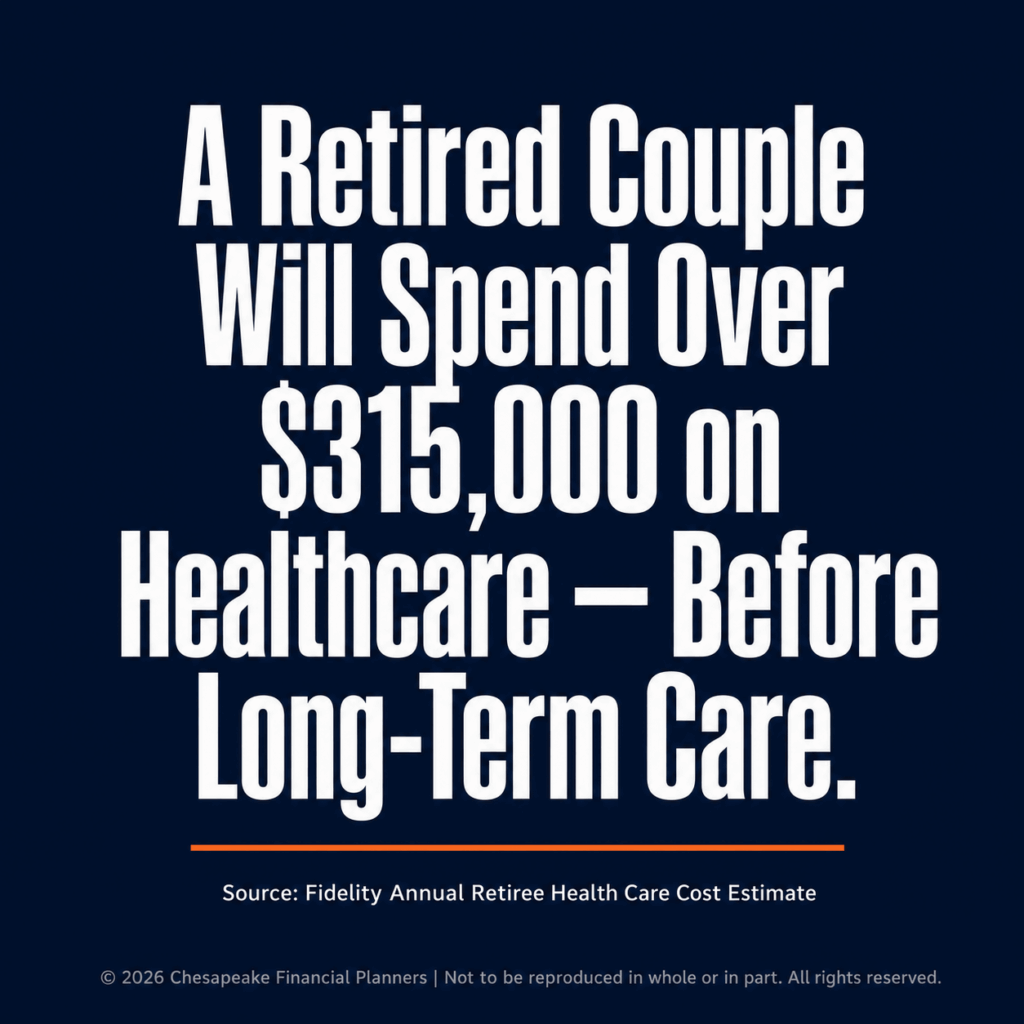
Plan on roughly $172,500 per person, or about $345,000 for a 65-year-old couple, to cover healthcare costs in retirement, according to Fidelity's annual Retiree Health Care Cost Estimate. That figure covers Medicare premiums, out-of-pocket costs, and prescriptions over the rest of your life. It does not include long-term care, dental, vision, or hearing, which can each add tens of thousands more. The number is large because healthcare is the one major expense that grows faster than your income while your ability to earn shrinks.
On This Page
- Key Takeaways
- Why Are Healthcare Costs in Retirement Higher Than Most People Expect?
- What Does Medicare Cover in 2026, and What Does It Leave Out?
- Should You Choose Medigap or Medicare Advantage?
- How Do You Cover Healthcare If You Retire Before 65?
- How Much Does Long-Term Care Cost, and How Do You Plan for It?
- How Do Taxes and IRMAA Raise Your Healthcare Costs?
- How Should You Build Healthcare Into Your Retirement Plan?
- Frequently Asked Questions
- Plan for the Healthcare Year You Hope Never Comes
- Disclosures
Key Takeaways
- A 65-year-old couple retiring today needs about $345,000 for healthcare, excluding long-term care.
- The standard 2026 Medicare Part B premium is $202.90 per month, with high earners paying IRMAA surcharges on top.
- Roughly 70% of people turning 65 will need some form of long-term care, which Medicare does not cover.
- Retiring before 65 creates a coverage gap that can cost a couple $15,000 to $25,000 a year.
- Healthcare inflation runs 2 to 3 points above general inflation, eroding Social Security's purchasing power over time.
About the Author: Jeff Judge, CFP®, AEP®, ChFC®, CLU® is Managing Partner of Chesapeake Financial Planners in Forest Hill, Maryland. He has been helping families and business owners in Harford County and the Baltimore metro area navigate retirement healthcare planning since earning his CFP® certification in 2013, by using Chesapeake Financial Planners’ signature process, the R.U.D.D.E.R. method™. Jeff's observation after two decades of client work: most people underestimate healthcare not because they ignore it, but because they budget for an average year and never plan for the expensive year that eventually arrives.
Why Are Healthcare Costs in Retirement Higher Than Most People Expect?
Healthcare costs in retirement are higher than expected because they escalate with age, vary widely by health status, and inflate faster than the rest of your budget. Most pre-retirees anchor on what they pay for health insurance today through an employer plan. That anchor is wrong. Once you leave the workforce, you carry the full weight of premiums, deductibles, and the costs Medicare was never designed to cover.
According to Fidelity, the average 65-year-old couple retiring today will need about $345,000 to cover healthcare throughout retirement. That works out to roughly $13,800 per year over a 25-year retirement. But the costs are not spread evenly. Healthcare spending tends to stay modest from ages 65 to 75, then climbs sharply as chronic conditions develop and medical interventions increase.
What drives healthcare inflation faster than your income?
Healthcare inflation historically runs 2 to 3 percentage points above general inflation. Your Social Security benefit receives an annual cost-of-living adjustment, but that adjustment is tied to general inflation, not medical-specific increases. The Centers for Medicare & Medicaid Services projects national health spending will continue to grow faster than the broader economy through the rest of the decade. Over a 20- or 30-year retirement, that gap compounds into a real squeeze on your buying power.
Jeff Judge often tells clients to stop thinking about healthcare as a fixed line item. "Plan for the year your knee replacement, a new set of hearing aids, and a Part D formulary change all land at once," he says. "That year is coming. The question is whether your plan absorbs it or breaks." This is exactly the kind of stress test the firm runs during the Reassess and Refine stage of its planning process.
What Does Medicare Cover in 2026, and What Does It Leave Out?
Medicare covers most hospital and medical care starting at age 65, but it does not cover everything, and the gaps add up to thousands of dollars a year. Treat Medicare as your foundation, not your safety net. Understanding what it covers, and what it does not, is the difference between a healthcare budget that holds and one that surprises you.
What does each part of Medicare cover?
Medicare is built from four parts, and each handles a different slice of your care.
- Part A (Hospital Insurance): Covers inpatient hospital stays, skilled nursing facility care, hospice, and some home health care. Most people pay no premium if they or a spouse paid Medicare taxes for at least 10 years. The Part A inpatient deductible is $1,736 per benefit period in 2026.
- Part B (Medical Insurance): Covers doctor visits, outpatient care, preventive services, and durable medical equipment. The standard 2026 Part B premium is $202.90 per month, with an annual deductible of $283 and 20% coinsurance on most services after that.
- Part C (Medicare Advantage): A private alternative that bundles Parts A and B, usually adds Part D, and often includes extras. More on this below.
- Part D (Prescription Drug Coverage): Optional drug coverage through private insurers. Premiums vary, typically running from $30 to $90 per month depending on the plan and your medications.
What does Medicare not cover?
This is where careful planning earns its keep. Original Medicare leaves several large gaps:
- Dental care: Routine cleanings, fillings, extractions, and dentures are not covered.
- Vision care: Eye exams for glasses and contacts are excluded, though cataract surgery is covered.
- Hearing aids: Not covered, and a quality pair runs $2,000 to $6,000 out of pocket.
- Long-term care: Custodial care in a nursing home or assisted living facility is not covered, which is the single biggest gap of all.
- Deductibles and coinsurance: With no annual out-of-pocket cap under Original Medicare alone, a serious illness can expose you to open-ended costs.
That last point is the one most people miss. Original Medicare has no maximum out-of-pocket limit. A long hospitalization or a chronic condition that demands ongoing treatment can run your 20% coinsurance into five figures with nothing to stop it. That structural gap is precisely why supplemental coverage exists. For a deeper walkthrough of how the four parts fit together, see What Are the Different Parts of Medicare and What Do They Cover?.
Should You Choose Medigap or Medicare Advantage?
Choose Medigap if you want predictable costs and the freedom to see any doctor who accepts Medicare; choose Medicare Advantage if you want lower monthly premiums and are comfortable with a provider network. Both close the gaps in Original Medicare, but they do it in opposite ways, and the choice has long-term consequences that are hard to reverse.
How do Medigap plans work?
Medigap policies, sold by private insurers, help pay the deductibles, coinsurance, and copayments that Original Medicare leaves to you. There are 10 standardized plans, labeled A through N, with Plan G being the most comprehensive option for those newly eligible. Premiums typically range from $150 to $400 per month depending on your location, age, and plan. You pay more in predictable monthly premiums in exchange for protection against unpredictable out-of-pocket costs, and you can see any provider nationwide who accepts Medicare. There are no network restrictions and no referrals. For help narrowing the options, see What Is the Best Medigap Plan for New Medicare Beneficiaries?.
How do Medicare Advantage plans work?
Medicare Advantage plans, often structured as HMOs or PPOs, replace Original Medicare and usually bundle in prescription drug coverage plus extras like dental, vision, and hearing. Monthly premiums are often low, sometimes $0, but you pay copays as you use services. These plans carry a federally required annual out-of-pocket maximum, capped at $9,250 for in-network care in 2026. You are generally restricted to the plan's network except in emergencies.
Here is the trade-off side by side:
| Feature | Medigap (Supplement) | Medicare Advantage (Part C) |
|---|---|---|
| Monthly premium | Higher ($150-$400) | Often low or $0 |
| Provider access | Any Medicare provider, nationwide | Network only (HMO/PPO) |
| Out-of-pocket predictability | Very high | Variable; capped at $9,250 in-network |
| Extra benefits (dental/vision) | Not included | Often included |
| Prescription drug coverage | Separate Part D needed | Usually built in |
| Best for | Frequent care, travel, provider choice | Healthy retirees minimizing premiums |
Jeff Judge has watched this decision play out hundreds of times. "Switching from Medicare Advantage back to Medigap later is not guaranteed," he warns. "In most states, once you are past your initial enrollment window, a Medigap insurer can underwrite you and decline coverage based on health. So the cheap plan you picked at 65 can trap you when you need the flexible plan at 78." That asymmetry is why the firm spends real time on this choice during the Discuss and Decide stage rather than letting clients default to the lowest premium. Compare the supplement options in detail at What Are the Different Medicare Supplement Plans and Which Is Best?.
How Do You Cover Healthcare If You Retire Before 65?
If you retire before 65, you need private coverage to bridge the gap until Medicare eligibility, and that bridge can cost a couple $15,000 to $25,000 a year. This pre-Medicare window is one of the most underestimated expenses in early retirement planning. You are no longer on an employer plan and not yet eligible for Medicare, which leaves four main paths.
- COBRA continuation coverage: Keeps your employer plan for up to 18 months, but you pay the full premium, often $700 to $1,500 or more per month for family coverage.
- Healthcare Marketplace plans: Available through HealthCare.gov, with premium subsidies based on income. A well-managed retirement income strategy can keep your modified adjusted gross income low enough to qualify for meaningful subsidies.
- Spouse's employer coverage: If your spouse still works, joining their plan is often the most cost-effective option.
- Retiree HRAs: Some employers offer health reimbursement arrangements or retiree benefits that help bridge the gap to Medicare.
Why does income planning matter so much before 65?
Marketplace subsidies phase out as income rises, which makes this window a powerful tax-planning opportunity. Retirees who can control where their income comes from, drawing on cash, brokerage accounts, or Roth funds instead of large traditional IRA withdrawals, may qualify for premium subsidies that cut the cost of coverage substantially. This is one reason Jeff encourages clients to think about Roth conversions years before they retire. Lower future taxable income can mean lower healthcare premiums in the gap years and lower IRMAA surcharges later. See Should I Do Roth Conversions Before I Retire? for how that sequencing works.
The cost of coverage between retirement and Medicare eligibility can easily exceed $15,000 to $25,000 per year for a couple. If you are planning to step away from work in your late 50s or early 60s, this number belongs in your plan from day one. For a broader view of the years leading up to this decision, see What Should You Prioritize Financially in the 5 Years Before Retirement?.
How Much Does Long-Term Care Cost, and How Do You Plan for It?
Long-term care is the single largest healthcare risk in retirement, with a private nursing home room exceeding $100,000 a year and Medicare covering none of it. This is the gap that quietly destroys retirement plans, because the costs are enormous, the odds of needing care are high, and most people assume Medicare will step in. It will not.
According to the U.S. Administration for Community Living, roughly 70% of people turning 65 will need some form of long-term care during their lifetime. The average duration is about three years, but 20% will need care for more than five years. The Genworth Cost of Care Survey puts the national median cost of a private nursing home room above $100,000 per year, with assisted living and home health aides running tens of thousands annually as well.
What are your long-term care planning options?
There is no single right answer, and the best choice depends on your assets, your health, and your tolerance for risk. Three main strategies exist:
- Traditional long-term care insurance: Pays a daily or monthly benefit for qualifying care. Premiums have risen sharply over the past decade and can increase further, but the coverage protects your assets and gives you care options.
- Hybrid life insurance with long-term care riders: Combines a death benefit with long-term care coverage. If you never need care, your heirs receive the death benefit, which addresses the "use it or lose it" objection many people have to traditional policies.
- Self-insuring: Setting aside dedicated assets to fund potential care needs. This works for households with substantial wealth but exposes you to the full cost if care runs long.
Jeff's experience here is direct. "The clients who handle long-term care best are the ones who made a decision in their 50s or early 60s," he says. "Wait until your 70s and the insurance is either unaffordable or unavailable because of your health. The window to choose closes quietly, and most people do not notice it shut." Reviewing these choices is a core part of how the firm uncovers risk during planning. For a closer look at the products and alternatives, see What is long-term care insurance and do I need it? and What Are the Best Alternatives to Long-Term Care Insurance?. Jeff Judge notes: "By the time most people call me about long-term care insurance, they have already missed the pricing window, because a health issue in their late 60s has made them either uninsurable or facing premiums that make the math almost impossible to justify."
This is also where caring for the generation ahead of you enters the picture. Many clients face long-term care decisions for their own parents at the same time they are planning for themselves. See How Do I Help Aging Parents Financially Without Ruining My Retirement? for how to manage both at once.
How Do Taxes and IRMAA Raise Your Healthcare Costs?
Your income directly raises your Medicare premiums through IRMAA, the Income-Related Monthly Adjustment Amount, which can add hundreds of dollars a month for higher earners. Most people do not realize that healthcare costs in retirement are partly a tax problem. The more taxable income you report, the more you pay for Medicare, and large traditional IRA withdrawals or Roth conversions done at the wrong time can trigger surcharges you never saw coming.
IRMAA applies to both Part B and Part D premiums and is based on your modified adjusted gross income from two years prior. According to the Centers for Medicare & Medicaid Services, a single filer above the first income threshold pays a surcharge on top of the standard $202.90 Part B premium, and the surcharge climbs through several income brackets. For a high-income couple, IRMAA can add thousands of dollars a year to their combined Medicare cost.
How can you manage IRMAA before it hits?
The key is the two-year look-back. Because 2026 premiums are based on 2024 income, planning has to happen well in advance. Strategies that help include spreading Roth conversions across lower-income years, using qualified charitable distributions to satisfy required minimum distributions without raising taxable income, and coordinating the timing of large withdrawals. A single dollar over an IRMAA threshold can cost you the full surcharge for that bracket, so the planning is worth the effort. See How do Roth conversions affect IRMAA and Medicare Part B premiums? and How Can I Donate From My IRA and Reduce Taxes? for the mechanics.
This is one of the clearest examples of why healthcare and tax planning cannot live in separate spreadsheets. The decisions that lower your tax bill in your 60s are often the same decisions that lower your healthcare bill in your 70s.
How Should You Build Healthcare Into Your Retirement Plan?
Build healthcare into your plan by estimating premiums, reserving funds for the expensive years, addressing long-term care early, and coordinating income to control IRMAA. A healthcare budget is not a single number you set once. It is a moving target that shifts as you age, as your health changes, and as policy changes around you.
Chesapeake Financial Planners approaches this through the R.U.D.D.E.R. Method™, Chesapeake Financial Planners' six-step planning process: Review and Recognize, Uncover and Understand, Design and Develop, Discuss and Decide, Execute and Empower, and Reassess and Refine. Healthcare touches every stage. We review what coverage you have, uncover the gaps and the risks, design a funding strategy for premiums and long-term care, decide between coverage options, execute the enrollments on time, and reassess as your needs evolve.
What practical steps can you take now?
A few moves make the biggest difference regardless of your age:
- Fund an HSA while you still can. If you have a high-deductible health plan before retirement, a health savings account is the most tax-efficient way to save for future medical costs, with triple tax advantages. Contributions are deductible, growth is tax-free, and qualified withdrawals are tax-free.
- Plan your enrollment timing. Missing your initial Medicare enrollment window can trigger lifelong penalties on Part B and Part D premiums.
- Stress-test the expensive year. Build a budget that survives a year with a hospitalization, new hearing aids, and a major dental expense stacked together.
- Address long-term care in your 50s or early 60s. The window to qualify for affordable coverage closes earlier than most people expect.
- Coordinate income to stay under IRMAA thresholds. Sequencing withdrawals and conversions can save thousands.
Healthcare is one of the largest variables in any retirement plan. For a complete picture of how it fits with everything else, see How Much Money Do I Actually Need to Retire Comfortably? and How do I plan for rising healthcare costs in retirement?.

Frequently Asked Questions
How much does the average couple need for healthcare in retirement?
A 65-year-old couple retiring today needs roughly $345,000 to cover healthcare throughout retirement, according to Fidelity's annual estimate. That figure covers Medicare premiums, out-of-pocket costs, and prescription drugs over a typical retirement. It does not include long-term care, dental, vision, or hearing expenses, which can add tens of thousands more.
Does Medicare cover long-term care costs?
No, Medicare does not cover long-term custodial care in a nursing home or assisted living facility, which is the largest healthcare gap retirees face. Medicare pays only for short-term skilled nursing after a qualifying hospital stay. Custodial care, help with daily activities like bathing and dressing, falls to you, long-term care insurance, or Medicaid once your assets are spent down.
What is the standard Medicare Part B premium in 2026?
The standard Medicare Part B premium in 2026 is $202.90 per month, according to the Centers for Medicare & Medicaid Services. Higher earners pay more through IRMAA surcharges based on income from two years prior. The 2026 Part B annual deductible is $283, after which you generally pay 20% coinsurance on most covered services.
What happens to my health coverage if I retire before 65?
If you retire before 65, you must arrange private coverage until Medicare eligibility, typically through COBRA, a Marketplace plan, a spouse's employer plan, or a retiree HRA. This gap can cost a couple $15,000 to $25,000 per year. Managing your taxable income during these years can qualify you for Marketplace premium subsidies that lower the cost substantially.
Is Medigap or Medicare Advantage better?
Medigap is generally better if you want provider freedom and predictable costs, while Medicare Advantage suits healthy retirees who want low premiums and accept a network. The critical catch is that switching from Medicare Advantage back to Medigap later often requires medical underwriting, which means a Medigap insurer can decline you based on your health.
How does IRMAA affect my Medicare costs?
IRMAA raises your Medicare Part B and Part D premiums when your modified adjusted gross income exceeds set thresholds, based on income from two years prior. For higher-income couples, IRMAA can add thousands of dollars a year. Because of the two-year look-back, managing income through Roth conversion timing and qualified charitable distributions requires planning well in advance.
Can I use an HSA to pay for healthcare in retirement?
Yes, a health savings account is one of the most tax-efficient ways to fund retirement healthcare, offering deductible contributions, tax-free growth, and tax-free qualified withdrawals. You must have a high-deductible health plan to contribute, and you can no longer contribute once you enroll in Medicare. Funds already in the account remain available for qualified medical expenses tax-free.
When should I buy long-term care insurance?
The best window to buy long-term care insurance is your 50s or early 60s, when premiums are more affordable and your health is more likely to qualify you. Waiting until your 70s often means coverage is either unaffordable or unavailable due to underwriting. Roughly 70% of people turning 65 will eventually need some form of long-term care.
Plan for the Healthcare Year You Hope Never Comes
Healthcare costs in retirement are large, uneven, and tied directly to choices you make years before you stop working. The retirees who handle them best are not the ones who got lucky with their health. They are the ones who built a plan that absorbs the expensive year, controlled their income to manage IRMAA, and made the long-term care decision while they still had options.
If this guide was useful, our free retirement planning resources go deeper on the moving parts, from Medicare enrollment timing to tax-efficient withdrawal strategies. Download them at chesapeakefp.com to start building healthcare into a plan that holds.
Disclosures
The information provided is for educational purposes only and should not be construed as investment advice. Investment strategies should be tailored to individual circumstances, risk tolerance, and goals. Past performance doesn't guarantee future results. Consult with qualified financial professionals regarding your specific situation.
Advisors associated with Chesapeake Financial Planners may be either (1) LPL Financial Registered Representatives offering securities through LPL Financial, Member FINRA and SIPC, and investment advisor representatives offering investment advice through Great Valley Advisor Group; or (2) solely investment advisor representatives offering investment advice through Great Valley Advisor Group and not affiliated with LPL Financial. Great Valley Advisor Group, and Chesapeake Financial Planners are separate entities from LPL Financial.


