

How Does Financial Planning Work When I'm Single or Child-Free?
Last reviewed: July 2026
Financial planning for singles works the same way it does for everyone, except you carry every decision alone. There is no second income to fall back on, no spouse to inherit your assets by default, and no adult child to step in if you get sick. That changes three things specifically: you need a deeper emergency cushion, your estate plan has to name people on purpose, and your long-term care strategy can't assume a family caregiver. The good news is that single and child-free people often save more and have more flexibility to design a plan around their actual life.
Key Takeaways
- Single people carry 100% of their financial risk alone, which raises the bar on emergency savings, disability coverage, and long-term care planning.
- Without a spouse or children, your assets do not pass automatically; you must name beneficiaries and choose a personal representative deliberately.
- The 2026 IRA contribution limit is $7,500, giving high-saving singles room to build retirement wealth faster.
- Long-term care planning matters more for singles, since 70% of people turning 65 will need some care, often without a built-in family caregiver.
About the Author: Jeff Judge, CFP®, AEP®, ChFC®, CLU® is Managing Partner of Chesapeake Financial Planners in Forest Hill, Maryland. He has been helping families and business owners in Harford County and the Baltimore metro area navigate estate and retirement planning since earning his CFP® certification in 2013, by using Chesapeake Financial Planners’ signature process, the R.U.D.D.E.R. method™. Jeff often points out that single clients are some of the easiest to plan for and the hardest to get to start, because there's no spouse asking the hard questions for them.
Being single or child-free does not make planning simpler. It makes it more important to get right, because the safety nets most people assume they have aren't there. Here's how the major pieces change when it's just you.
Why Does Financial Planning Look Different for Single People?
When you're single, you are the entire financial system. One income, one set of decisions, one person responsible if something goes wrong. That concentration of risk is the single biggest difference, and it shapes everything downstream.
A married household can usually survive one person losing a job because the other income keeps the lights on. A single person has no such cushion, which is why the standard emergency fund advice changes. Instead of three to six months of expenses, single people should target six to twelve months. If you lose your income, there is no backup, and that gap has to come from cash you already set aside.
The flip side is real flexibility. Single people frequently have higher savings rates because they aren't funding a partner's spending or a child's college account. The average cost to raise a child to age 18 runs well over $230,000 according to USDA estimates, money that child-free people can redirect toward retirement, real estate, or simply working fewer years. Jeff Judge has watched single clients retire early specifically because they leaned into that advantage instead of letting lifestyle creep absorb it.
The risk isn't just income loss. It's also that no one is positioned to make decisions for you if you can't. A spouse usually has legal standing to handle finances and medical choices. When you're single, nobody does, unless you put it in writing.
What is the difference between own occupation and any occupation disability insurance?
How Should Single People Approach Retirement Planning?
Single people should max out tax-advantaged accounts aggressively, plan for a longer self-funded retirement, and build in a long-term care strategy that doesn't rely on family. With no second Social Security check and no spousal benefits, the math is less forgiving, so the savings rate has to do more work.
Start with the accounts. The 2026 401(k) employee contribution limit is $24,500, and the IRA limit is $7,500. If you're 50 or older, catch-up contributions push those numbers higher. High-saving singles who aren't splitting income with a partner can often fill these buckets completely, and that consistency compounds into a meaningfully larger retirement balance over twenty or thirty years.
Social Security is where single status hits hardest. A married couple can coordinate claiming strategies and a survivor keeps the larger of two benefits. A single person gets one benefit, full stop, and there's no survivor to plan around. That makes delaying your claim to age 70, when the benefit is largest, more valuable for many singles than it is for couples who can hedge with two checks.
Then there's longevity risk, the chance you outlive your money. Without a spouse to share fixed costs like housing, a single retiree shoulders the full overhead alone for the entire retirement. Annuitizing part of your portfolio or building a larger guaranteed-income floor can take that worry off the table.
How Do High Earners Open a Backdoor Roth IRA in 2026?
What Estate Planning Documents Do Single People Need?
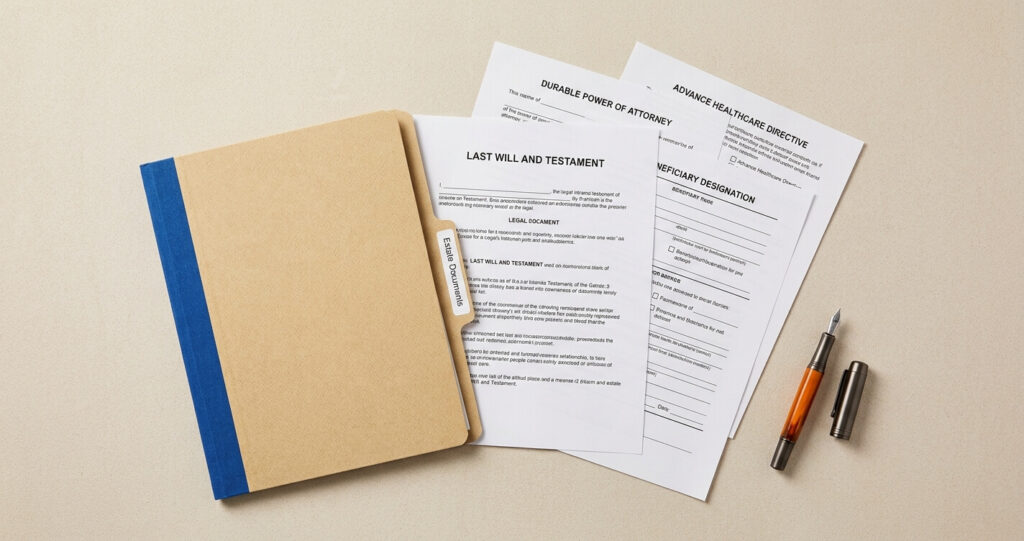
Single people need a will, a financial power of attorney, a healthcare power of attorney, an advance directive, and current beneficiary designations on every account. Without these, the law decides who controls your money and your medical care, and the answer is rarely the person you'd choose.
Here's the part most single people miss: if you die without a will, state intestacy law distributes your assets to relatives in a fixed order, usually parents, then siblings, then more distant family. A close friend, an unmarried partner, or a favorite charity gets nothing. If you want anyone outside your bloodline to inherit, you have to say so in a will. There is no default that captures your actual relationships.
The powers of attorney matter just as much while you're alive. A financial power of attorney lets someone you trust pay your bills and manage accounts if you're incapacitated. A healthcare power of attorney lets someone make medical decisions when you can't. For a married person, a spouse often fills these roles informally. For a single person, without the documents, the court appoints a guardian, and that process is slow, expensive, and out of your control.
Beneficiary designations are the quiet workhorse here. Retirement accounts, life insurance, and transfer-on-death accounts pass by designation, not by will, so they override whatever your will says. Single people should review these regularly, because an ex-partner or a deceased parent listed years ago will still control where that money goes.
What Is a Financial Power of Attorney and Why Do I Need One?

Who Makes Decisions for a Single Person With No Spouse or Kids?
Whoever you name in your documents makes decisions, and if you name no one, a court decides for you. This is the gap that catches single people off guard, because the people who would informally step in for a married person have no legal authority to act on your behalf.
Choosing your decision-makers deserves real thought. Your personal representative (executor) settles your estate. Your financial agent handles money if you're incapacitated. Your healthcare agent makes medical calls. These can be the same person or different people, and they should be someone organized, trustworthy, and willing to take it on. A sibling, a close friend, or a trusted niece or nephew often fills these roles for single clients.
When there's no obvious individual, professional fiduciaries exist. A bank trust department, an attorney, or a licensed fiduciary can serve as personal representative or trustee for a fee. It's a clean solution when family relationships are complicated or when you simply don't have someone you'd burden with the job.
Single people should also name backups. Naming one person and stopping there is a common mistake, because if that person dies, moves, or declines, you're back to the court appointing a stranger. A primary and at least one alternate for each role closes that gap.
What is a will and do I need one for my estate?
Frequently Asked Questions
Do single people really need an estate plan if they don't have kids?
Yes, and arguably more than parents do. Without a spouse or children, your assets pass under state intestacy law to relatives you may not have chosen, and a court decides your medical care if you're incapacitated. A will, powers of attorney, and current beneficiary designations let you control who inherits and who acts for you.
How much should a single person have in an emergency fund?
A single person should target six to twelve months of essential expenses, double the typical three-to-six-month guideline. With only one income and no partner's paycheck as backup, a job loss or medical event hits your full budget at once. The larger cushion buys time to recover without raiding retirement accounts or taking on debt.
Should single people buy life insurance?
It depends on who relies on your income and what debts you'd leave behind. If no one depends on you financially and your assets cover your obligations, life insurance may be optional. But singles with co-signed debt, aging parents they support, or estate-liquidity needs often still benefit. Jeff Judge reviews this case by case rather than applying a blanket rule.
What happens to my retirement accounts if I die without naming a beneficiary?
If you die without a named beneficiary, your retirement account typically passes to your estate, which forces it through probate and often accelerates the tax bill. Naming a beneficiary, even a charity or a trust, keeps the account out of probate and gives you control over who receives it and how.
Is long-term care insurance more important for single people?
Generally yes, because single people often lack a built-in family caregiver. Roughly 70% of people turning 65 will need some long-term care, and without a spouse or adult child to provide it, single individuals more frequently pay for professional care. Planning ahead, whether through insurance or earmarked assets, prevents that cost from derailing the rest of your plan.
Ready to Build a Plan Designed for Your Life?
Financial planning for singles isn't about copying a married couple's playbook and removing a person. It's about building something around how you actually live, with the right cushion, the right documents, and the right people named on purpose. If this was helpful, our estate planning guide walks through the documents every single person needs in plain language. Download it at chesapeakefp.com.
Disclosures
The information provided is for educational purposes only and should not be construed as investment advice. Investment strategies should be tailored to individual circumstances, risk tolerance, and goals. Past performance doesn't guarantee future results. Consult with qualified financial professionals regarding your specific situation.
Advisors associated with Chesapeake Financial Planners may be either (1) LPL Financial Registered Representatives offering securities through LPL Financial, Member FINRA and SIPC, and investment advisor representatives offering investment advice through Great Valley Advisor Group; or (2) solely investment advisor representatives offering investment advice through Great Valley Advisor Group and not affiliated with LPL Financial. Great Valley Advisor Group, and Chesapeake Financial Planners are separate entities from LPL Financial.


