

How Does a 1031 Exchange Work for Real Estate Investors?
Last reviewed: July 2026
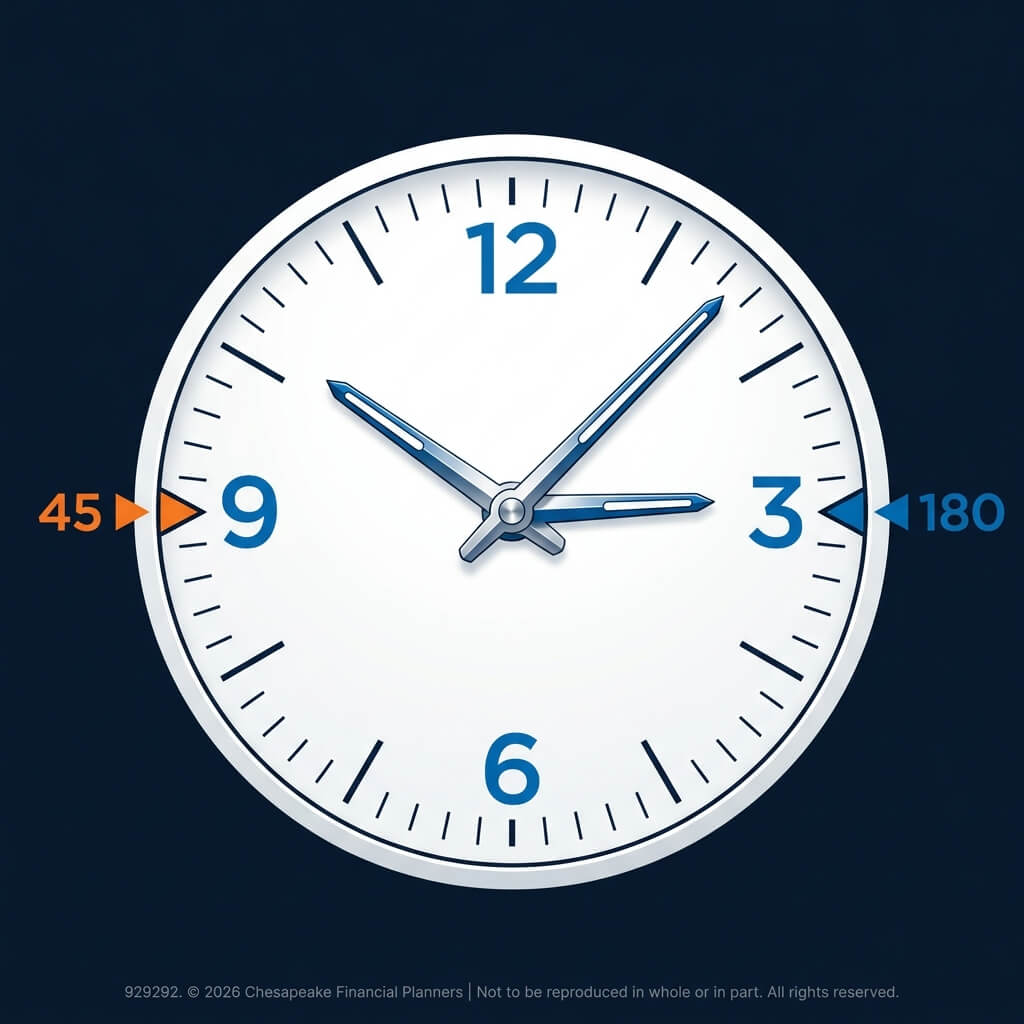
A 1031 exchange lets a real estate investor sell an investment property and defer the capital gains taxes by reinvesting the proceeds into another investment property of equal or greater value. You name your replacement property within 45 days, close within 180 days, and route the proceeds through a qualified intermediary so you never touch the cash. Done right, the tax bill that would have come due gets pushed down the road, sometimes for decades.
Key Takeaways
- A 1031 exchange defers federal capital gains tax, which the IRS caps at 20% for the highest earners, plus a 3.8% net investment income tax.
- You must identify replacement property within 45 days and close within 180 days, with no extensions.
- Since 2018, only real property qualifies for like-kind treatment under IRS rules.
- A qualified intermediary must hold the proceeds; touching the cash yourself voids the exchange.
About the Author: Jeff Judge, CFP®, AEP®, ChFC®, CLU® is Managing Partner of Chesapeake Financial Planners in Forest Hill, Maryland. He has been helping families and business owners in Harford County and the Baltimore metro area navigate real estate and capital gains decisions since earning his CFP® certification in 2013, by using Chesapeake Financial Planners’ signature process, the R.U.D.D.E.R. method™. Jeff often reminds clients that a 1031 exchange is a deferral, not a forgiveness, and the strategy only pays off when it fits the larger plan instead of driving it.
What Is a 1031 Exchange and How Does It Defer Taxes?
A 1031 exchange, named for Section 1031 of the Internal Revenue Code, is a tax-deferral strategy that lets you swap one investment property for another without recognizing the capital gain at the time of sale. Instead of writing a check to the IRS, you keep your full equity working in real estate.
Here's why the math matters. The IRS taxes long-term capital gains at 0%, 15%, or 20% depending on your income, and high earners also owe a 3.8% net investment income tax on top of that. Add Maryland's state income tax and you can hand back more than a quarter of your gain. A 1031 exchange defers all of it as long as you follow the rules.
This is deferral, not elimination. The deferred gain carries into your replacement property's cost basis. If you eventually sell without doing another exchange, the tax comes due. But many investors keep exchanging until they die, at which point heirs may receive a step-up in basis that can wipe out the deferred gain entirely.
What Are the Timing Rules for a Valid 1031 Exchange?
The two deadlines are strict, and the IRS does not grant extensions for weekends or holidays.
The 45-day identification rule. Within 45 days of closing on the property you sold, you must identify potential replacement properties in writing to your qualified intermediary. You can name up to three properties of any value, or more under specific valuation tests.
The 180-day exchange period. You must close on a replacement property within 180 days of the sale. This clock runs at the same time as the 45-day clock, so once you've used your identification window, you typically have about 135 days left to close.
The equal-or-greater-value rule. To defer the entire gain, your replacement property must cost as much or more than what you sold, and you must reinvest all the equity. Take any cash out, and that portion becomes taxable "boot." Buy something cheaper, and the difference is taxed too.
Jeff has watched investors fall in love with a property on day 50 only to learn they never identified it in time. The deadlines feel generous until you're racing the calendar. Build your shortlist before you ever list the property you're selling.
What Property Qualifies as Like-Kind?
The term "like-kind" is broader than most investors expect, but one change narrowed it sharply. Since the 2017 tax law took effect in 2018, only real property qualifies for 1031 treatment. Equipment, artwork, and other personal property no longer count.
For real estate, almost any investment or business property can be exchanged for any other. You can trade an apartment building for raw land, a strip mall for a warehouse, or several small rentals for one large building. Both sides must be held for investment or business use.
Your primary residence does not qualify. That sale falls under Section 121, which lets a married couple exclude up to $500,000 of gain (or $250,000 if single) on a home they've lived in for two of the last five years. Vacation homes can sometimes qualify for a 1031 exchange, but only with documented rental activity and careful structuring.
Why Do You Need a Qualified Intermediary?
You cannot take the sale proceeds and still complete a valid exchange. The moment you have "constructive receipt" of the money, the IRS treats the transaction as a taxable sale. That's where the qualified intermediary comes in.
A qualified intermediary is an independent third party who holds your sale proceeds in a segregated account and then applies those funds to buy your replacement property. They prepare the exchange documents, coordinate with the closing agents, and keep you compliant with the timing rules.
Choosing one matters more than people think. There is no federal licensing requirement for intermediaries, so look for strong bonding, fidelity insurance, segregated accounts, and a long track record. This is one decision where Jeff steers clients to vet the firm holding their money as carefully as they vet the property they're buying.
How Do 1031 Exchanges Fit Different Stages of an Investor's Life?
The strategy flexes as your goals change.
| Stage | Typical 1031 Move | Why It Fits |
|---|---|---|
| Growth | Trade up into larger or higher-yield properties | Compound equity without a tax drag |
| Transition | Swap active rentals for triple-net-lease property | Tenants handle taxes, insurance, and upkeep |
| Estate planning | Move into a Delaware Statutory Trust | Fractional, professionally managed, easier to divide among heirs |
A Delaware Statutory Trust lets you own a fractional interest in institutional-grade real estate without managing anything. For an investor ready to stop fielding tenant calls, it's a way to stay invested and keep the deferral alive. These trusts carry their own risks, including illiquidity, and they aren't right for everyone.
This is also where the R.U.D.D.E.R. Method™ earns its keep. The R.U.D.D.E.R. Method™ is Chesapeake Financial Planners' six-step planning process: Review and Recognize, Uncover and Understand, Design and Develop, Discuss and Decide, Execute and Empower, and Reassess and Refine. A 1031 exchange should fall out of that process, not jump ahead of it.
When Does Skipping the 1031 Exchange Make Sense?
A 1031 exchange isn't always the right call. If you have capital losses to offset the gain, or you're in an unusually low-income year, paying the tax now may cost less than deferring it. If you need liquidity for another goal, the reinvestment requirement can trap your money.
Boot complicates things too. If you can't find a replacement property that fully absorbs your equity, part of the gain gets taxed anyway. Sometimes a partial exchange, or no exchange at all, is the cleaner answer once you run the numbers against your full financial plan.
For a deeper look at coordinating real estate gains with the rest of your tax picture, see our work on broader What Are the Best Tax Strategies for High Net Worth Individuals? and how a 1031 fits alongside How do you create a family wealth governance structure for long-term success?.
Frequently Asked Questions
How long do I have to complete a 1031 exchange?
You have two hard deadlines. You must identify replacement property within 45 days of selling your relinquished property, and you must close on it within 180 days of that sale. Both clocks start on the closing date, run concurrently, and the IRS grants no extensions, even for weekends or holidays.
Can I do a 1031 exchange on my primary home?
No, your primary residence does not qualify for a 1031 exchange because it is not held for investment or business use. Homeowners instead use the Section 121 exclusion, which lets married couples exclude up to $500,000 of gain and single filers up to $250,000, provided they meet the ownership and use tests.
What is "boot" in a 1031 exchange?
Boot is any value you receive in an exchange that isn't like-kind property, most commonly cash or debt relief. If you buy a cheaper replacement property or pull money out, that portion is taxable as a capital gain. To defer the entire gain, you must reinvest all your equity into property of equal or greater value.
Do I have to use a qualified intermediary?
Yes, a qualified intermediary is required for a standard delayed 1031 exchange. You cannot take possession of the sale proceeds yourself without triggering a taxable event. The intermediary holds the funds in a segregated account and uses them to acquire your replacement property, keeping the transaction compliant with IRS rules.
What happens to the deferred tax when I eventually sell?
The deferred gain carries forward into the cost basis of your replacement property, so it comes due if you later sell without doing another exchange. Many investors keep exchanging indefinitely, and if they hold property until death, heirs may receive a stepped-up basis that can eliminate the deferred gain entirely.
Can I exchange one property for several, or several for one?
Yes, the like-kind rules are flexible enough to allow either. You can split a single large property into multiple smaller ones to diversify across markets, or consolidate several properties into one larger asset to simplify management. As long as each property is held for investment or business use, the exchange can qualify.
If you found this helpful, our guide on coordinating real estate, gifting, and estate decisions goes deeper on tax-smart wealth transfer. Download it at chesapeakefp.com and see how a 1031 exchange fits the bigger picture. To go further, review our companion pieces on Maryland Inheritance Tax and What Are the Best Tax Strategies for High Net Worth Individuals?.
Investments in real estate may be subject to a higher degree of market risk because of concentration in a specific industry, sector or geographical sector. Other risks can include, but are not limited to, declines in the value of real estate, potential illiquidity, risks related to general and economic conditions, stage of development, and defaults by borrower.
Want to go deeper? Our Busy Professional's Guide to Making Financial Progress walks through this step by step.
Disclosures
The information provided is for educational purposes only and should not be construed as investment advice. Investment strategies should be tailored to individual circumstances, risk tolerance, and goals. Past performance doesn't guarantee future results. Consult with qualified financial professionals regarding your specific situation.
Investments in real estate may be subject to a higher degree of market risk because of concentration in a specific industry, sector or geographical sector. Other risks can include, but are not limited to, declines in the value of real estate, potential illiquidity, risks related to general and economic conditions, stage of development, and defaults by borrower.
Advisors associated with Chesapeake Financial Planners may be either (1) LPL Financial Registered Representatives offering securities through LPL Financial, Member FINRA and SIPC, and investment advisor representatives offering investment advice through Great Valley Advisor Group; or (2) solely investment advisor representatives offering investment advice through Great Valley Advisor Group and not affiliated with LPL Financial. Great Valley Advisor Group, and Chesapeake Financial Planners are separate entities from LPL Financial.


