
How Do TOD and POD Accounts Help Me Avoid Probate?
Last reviewed: July 2026
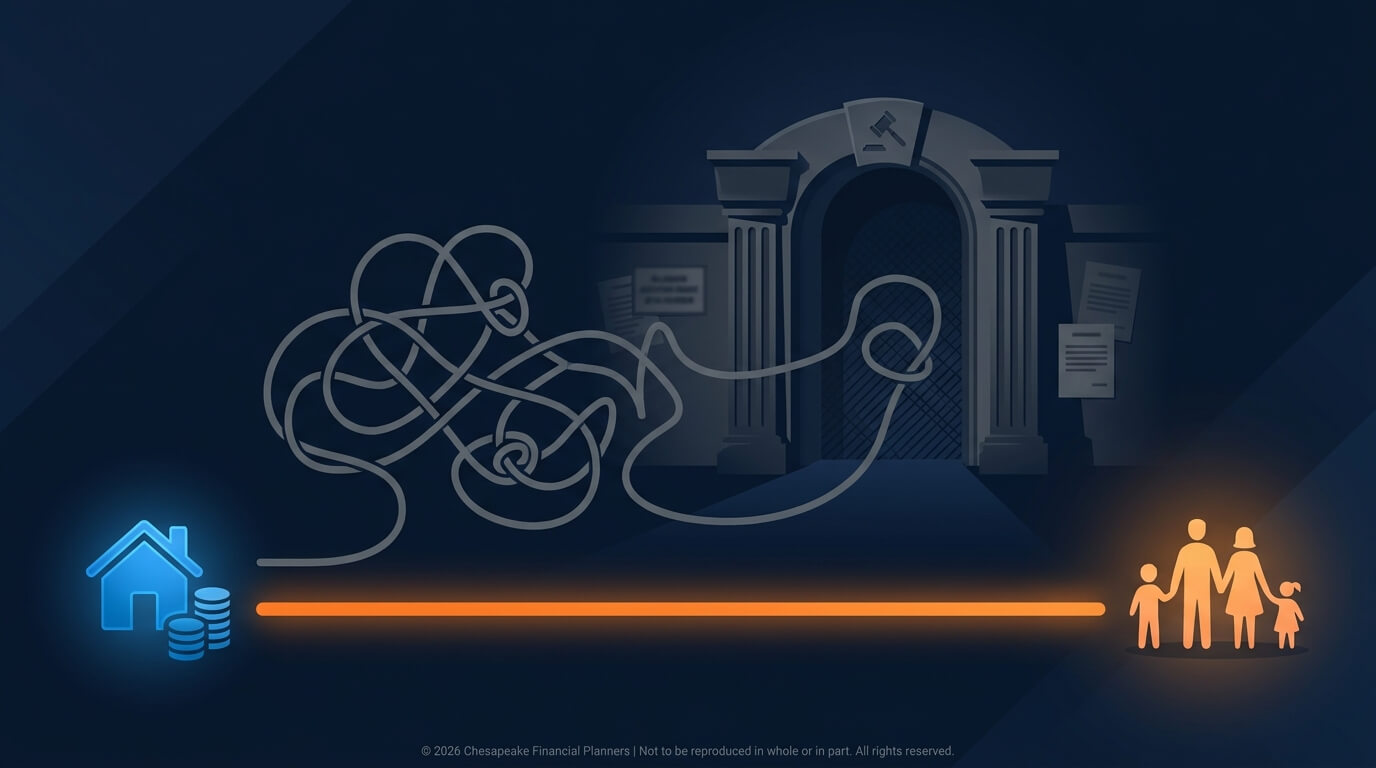
A transfer on death account passes directly to the people you name, skipping probate entirely. You list your beneficiaries with the brokerage or bank, and when you die, the assets move to them by operation of law without a court ever touching them. Payable on death (POD) works the same way for bank accounts. Both are the simplest probate-avoidance tools most people never set up.
Key Takeaways
- A transfer on death account moves brokerage assets to your named beneficiaries without probate, by law, the moment you die.
- Payable on death (POD) designations do the same job for checking, savings, and CD accounts at your bank.
- According to the American Bar Association, probate can take months to over a year and consume real estate value in fees.
- A TOD beneficiary designation overrides whatever your will says about that specific account, so they must stay in sync.
About the Author: Jeff Judge, CFP®, AEP®, ChFC®, CLU® is Managing Partner of Chesapeake Financial Planners in Forest Hill, Maryland. He has been helping families and business owners in Harford County and the Baltimore metro area navigate estate planning since earning his CFP® certification in 2013, by using Chesapeake Financial Planners’ signature process, the R.U.D.D.E.R. method™. In Jeff's experience, the clients who get burned aren't the ones without a will, they're the ones who set up a TOD beneficiary twenty years ago and never looked at it again.
What Is a Transfer on Death Account and How Does It Work?
A transfer on death account is a brokerage or investment account with a beneficiary designation attached. While you're alive, you own and control everything, you can trade, withdraw, or close the account, and the named beneficiary has zero rights to it. The designation only activates at your death.
When you die, the assets pass directly to the beneficiary you named, without going through probate court. They typically bring a certified death certificate and an account application to the custodian, and the account retitles into their name. No judge, no waiting on a court calendar, no public filing.
The legal backbone for this is the Uniform Transfer on Death Security Registration Act, which most states have adopted in some form. The Uniform Law Commission maintains the model statute that makes TOD registration valid across nearly every state. That uniformity is why almost any brokerage will let you add a TOD designation in minutes. Jeff Judge notes: "Adding a TOD designation to a brokerage account takes minutes at almost any custodian, and it means your beneficiary walks in with a death certificate and walks out with the account, completely bypassing the probate process that can tie up other assets for months."
How Is a POD Account Different From a TOD Account?
Payable on death and transfer on death do the exact same thing, the labels just track the account type. POD is the term banks use for checking accounts, savings accounts, money market accounts, and certificates of deposit. TOD is the term brokerages use for stocks, bonds, mutual funds, and ETFs held in a taxable account.
The mechanics are identical. You name a beneficiary, you keep full control while you're alive, and the money passes outside probate when you die. The Federal Deposit Insurance Corporation treats POD accounts as informal revocable trust accounts, which can also expand your FDIC coverage when you name multiple eligible beneficiaries.
If you're tidying up your estate, expect to set up POD on bank accounts and TOD on investment accounts. Same strategy, two different forms.
What Are the Real Advantages of Naming a TOD Beneficiary?
Speed and privacy are the two big wins. Probate is a public court process, and according to the American Bar Association, it routinely runs from several months to more than a year depending on the estate and the state. A TOD beneficiary gets access in weeks, not seasons, and nobody can pull the court file to see what your heirs received.
Cost is the other advantage. Probate carries court filing fees, and often executor and attorney fees that scale with the size of the estate. Skipping it for your investment accounts removes that drag entirely.
Jeff Judge often tells clients that TOD designations are the highest-return ten minutes in estate planning. There's no attorney fee to set one up, no ongoing maintenance, and the payoff is your family avoiding a court process during the worst month of their lives. The R.U.D.D.E.R. Method™, Chesapeake Financial Planners' six-step planning process of Review and Recognize, Uncover and Understand, Design and Develop, Discuss and Decide, Execute and Empower, and Reassess and Refine, treats beneficiary designations as a "Reassess and Refine" item because they drift out of date so easily.
When Does a TOD or POD Account Cause Problems?
These tools are simple, which is also their weakness. A TOD beneficiary designation overrides your will for that account, so if your will leaves "everything equally to my three children" but your brokerage TOD names only your oldest, the oldest takes the whole account. The will loses.
They also don't handle contingencies well. If your named beneficiary dies before you and you never updated the form, the account may default back into your probate estate, defeating the whole purpose. Naming a contingent beneficiary fixes this. And TOD accounts can be a poor fit when a beneficiary is a minor, has special needs, or struggles with money, because the assets land in their lap with no strings attached. A trust handles those situations better.
| Feature | TOD / POD Account | Revocable Living Trust |
|---|---|---|
| Avoids probate | Yes | Yes |
| Setup cost | Free at the institution | Attorney fees |
| Control after death | None, lump sum to beneficiary | Yes, terms you set |
| Good for minors or special needs | No | Yes |
| Privacy | Yes | Yes |
How Do I Set Up a TOD or POD Account?
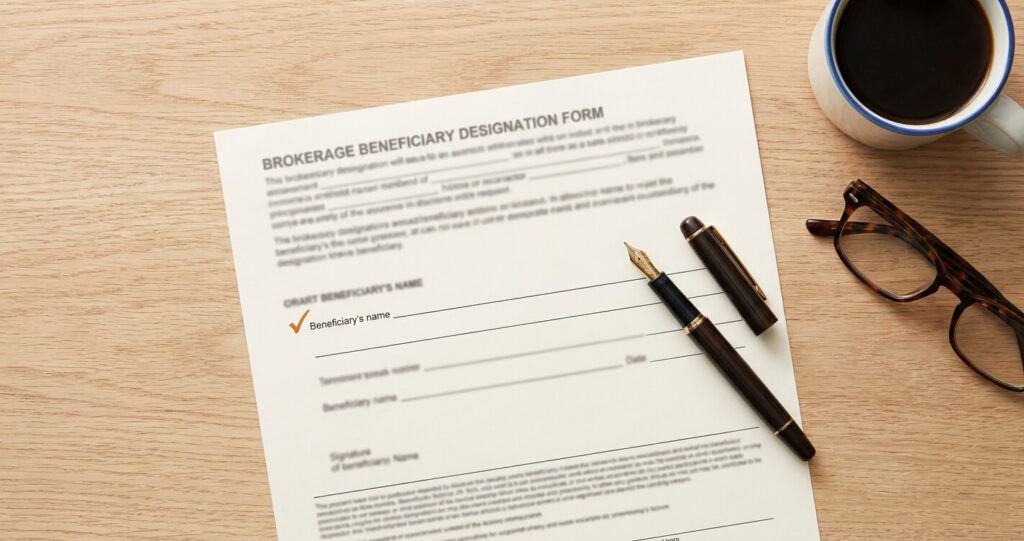
The process is short. For brokerage accounts, log in or call the custodian, request a TOD beneficiary form, name your primary and contingent beneficiaries with their full legal names and dates of birth, and submit it. For bank accounts, ask for a POD or "in trust for" designation and provide the same beneficiary details.
Review every designation after any major life event: marriage, divorce, a birth, or a death. This is exactly the kind of update people forget, which is why coordinating beneficiary forms with the rest of your plan matters so much.
Frequently Asked Questions
Does a transfer on death account override my will?
Yes, a transfer on death account overrides your will for that specific account. The beneficiary named on the TOD form receives those assets directly, regardless of what your will says. This is why your TOD designations and your will must be coordinated, otherwise one document quietly cancels out the other.
Can I have more than one TOD beneficiary?
Yes, you can name multiple TOD or POD beneficiaries and assign each a percentage of the account. You can also name contingent beneficiaries who inherit if a primary beneficiary dies before you. Naming contingents is the single most overlooked step, and skipping it can send the account back into probate.
Do TOD and POD accounts avoid estate taxes?
No, TOD and POD accounts avoid probate, not estate taxes. The assets still count toward your taxable estate for federal and state estate tax purposes. These accounts streamline the transfer process, but they don't shrink your estate or reduce any tax your heirs might owe on inherited assets.
Can a TOD beneficiary be changed later?
Yes, you can change a TOD or POD beneficiary at any time while you're alive, as often as you want, at no cost. You simply submit a new beneficiary form to the institution. Because changes are this easy, review your designations after any marriage, divorce, birth, or death in the family.
What happens if my TOD beneficiary dies before me?
If your TOD beneficiary dies before you and you named no contingent beneficiary, the account typically falls back into your probate estate, defeating the purpose. To prevent this, always name at least one contingent beneficiary. Reviewing your forms after any death in the family is the simplest safeguard.
The simplest probate-avoidance move costs nothing and takes ten minutes, but only if you set it up and keep it current. If you found this helpful, our estate planning guide walks through coordinating beneficiary designations, wills, and trusts so nothing falls through the cracks. Download it at chesapeakefp.com.
Do I need to update my beneficiary designations after a divorce or major life change?
What is a will and do I need one for my estate?
What Is a Financial Power of Attorney and Why Do I Need One?
Want to go deeper? Our How to Avoid Common Mistakes With Inherited Wealth walks through this step by step.
Disclosures
The information provided is for educational purposes only and should not be construed as investment advice. Investment strategies should be tailored to individual circumstances, risk tolerance, and goals. Past performance doesn't guarantee future results. Consult with qualified financial professionals regarding your specific situation.
Advisors associated with Chesapeake Financial Planners may be either (1) LPL Financial Registered Representatives offering securities through LPL Financial, Member FINRA and SIPC, and investment advisor representatives offering investment advice through Great Valley Advisor Group; or (2) solely investment advisor representatives offering investment advice through Great Valley Advisor Group and not affiliated with LPL Financial. Great Valley Advisor Group, and Chesapeake Financial Planners are separate entities from LPL Financial.


