
Should I Sell My Tech Stock All at Once or Gradually?
Last reviewed: July 2026
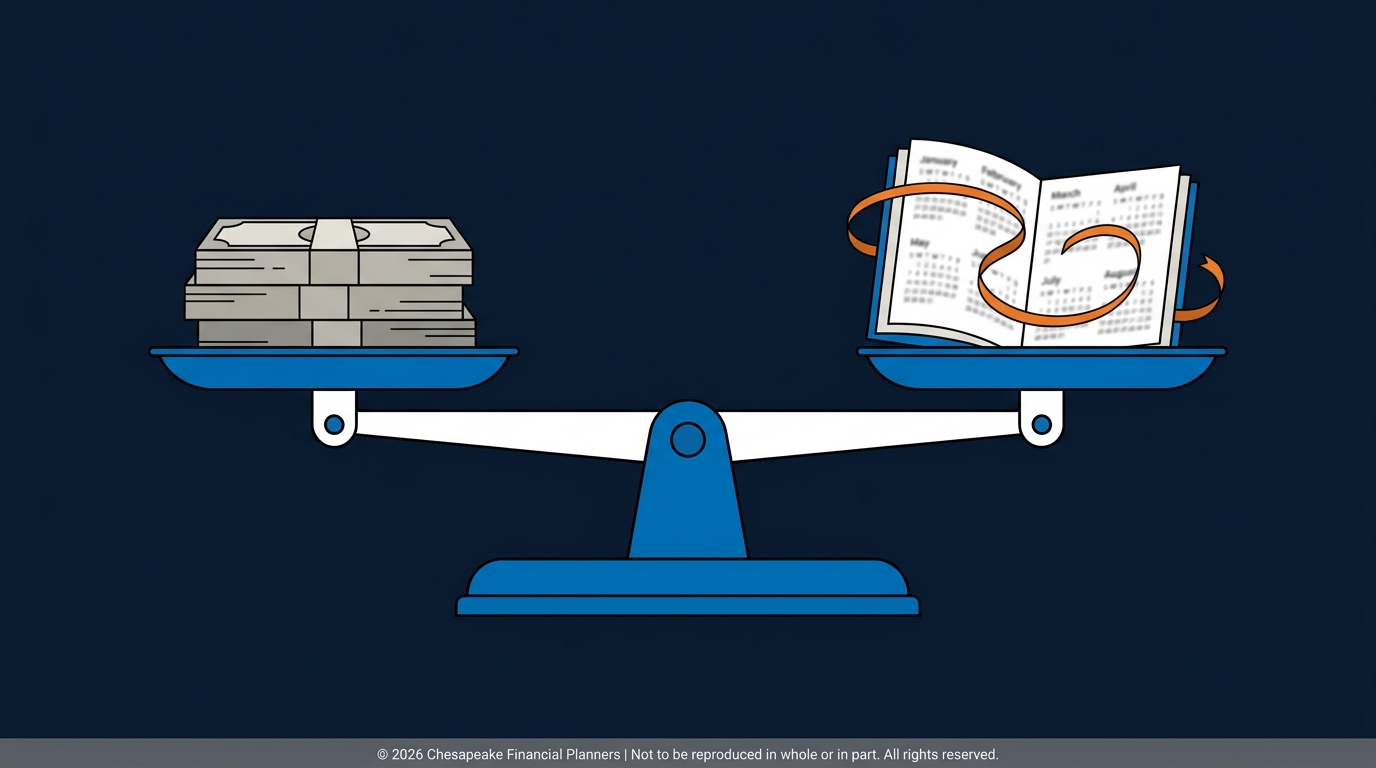
Sell your concentrated tech stock all at once if you are more than 50% concentrated, within ten years of retirement, or losing sleep over the daily price swings. Sell gradually if you are 20% to 40% concentrated, have a longer runway, and want to spread the capital gains tax across multiple years. There is no single correct answer when you decide to sell tech stock, but there is a framework that removes the guesswork. The right choice depends on three things you can actually measure: your concentration level, your tax exposure, and your timeline.
Key Takeaways
- Sell all at once when company stock exceeds 50% of your net worth or retirement is within ten years.
- The top federal long-term capital gains rate is 20% in 2026, plus a 3.8% net investment income tax for high earners.
- Selling gradually lets you spread gains across tax years and may keep you in lower brackets.
- Most individual stocks underperform a diversified index over their lifetime, so holding concentration is high-risk, not conservative.
- The decision is about risk management and taxes, not predicting where the stock goes next.
About the Author: Jeff Judge, CFP®, AEP®, ChFC®, CLU® is Managing Partner of Chesapeake Financial Planners in Forest Hill, Maryland. He has been helping families and business owners in Harford County and the Baltimore metro area navigate concentrated stock decisions since earning his CFP® certification in 2013, by using Chesapeake Financial Planners’ signature process, the R.U.D.D.E.R. method™. Jeff has watched more clients regret holding a winner too long than regret diversifying too early, and the math usually backs them up.
What Are the Two Ways to Sell Tech Stock?
There are two basic strategies, and the difference comes down to speed.
Sell all at once. You liquidate the entire position in one or a few transactions and immediately reinvest in a diversified portfolio. This is the rip-the-band-aid approach. It eliminates concentration risk in a single move.
Sell gradually. You sell a fixed percentage on a set schedule, monthly, quarterly, or after each vest, until you reach a target allocation. You keep some upside exposure and you spread the tax bill across calendar years.
Both get you to the same destination: a portfolio that no longer rises or falls on the fate of one company. The question is how fast you want to get there and how much tax friction you are willing to accept along the way.
When Does Selling All at Once Make Sense?
Selling everything at once is the right call more often than people expect, and the reason is risk, not return.
Concentration risk is real and brutal. When Meta reported an earnings miss in early 2022, the stock fell roughly 26% in a single trading day. An employee with 70% of their net worth in that stock watched a meaningful chunk of their wealth evaporate before lunch. No diversified portfolio moves like that.
There is also research suggesting that putting money to work immediately tends to beat dollar-cost-averaging it in over time, simply because markets rise more often than they fall. If your goal is a diversified portfolio, getting there faster usually wins.
And then there is the human factor. Selling gradually creates emotional anchors. The stock dips 8%, you decide to wait until it recovers, and two years later you are still overconcentrated and still waiting. Jeff sees this pattern constantly. The "I'll sell when it bounces back" plan quietly becomes the "I'll never sell" plan.
Sell all at once when you are more than 50% concentrated, when you are within five to ten years of retirement, when your company faces real headwinds, or when checking the stock price three times a day is costing you sleep.
When Does Selling Gradually Make Sense?
Selling in stages makes sense when the tax bill is large and your timeline is long.
Run the math on a typical position. Say you hold $800,000 of stock with a $200,000 cost basis. That is a $600,000 long-term capital gain. At the top federal long-term capital gains rate of 20% confirmed by the IRS, plus the 3.8% net investment income tax that applies above $200,000 in income for single filers, plus state tax, you could face a six-figure tax bill in a single year. Spreading those sales across two or three calendar years can keep more of the gain taxed at the lower 15% bracket and reduce the years you trip the NIIT threshold.
Gradual selling also keeps some upside. Sell 50% in year one, 30% in year two, 20% in year three. If the stock runs in year two, you still participate. You will not capture the full upside, but you will not feel like you sold the morning before a doubling either.
This path fits when you are 20% to 40% concentrated, have ten or more years to retirement, and want to manage capital gains taxes deliberately rather than absorbing them all at once.

How Do You Actually Decide?
Start by calculating your concentration. Divide the value of your company stock by your total investable net worth. That single percentage drives most of the decision.
If you are over 50%, lean hard toward selling all at once or close to it. The downside risk simply outweighs the tax cost of acting fast. If you are between 20% and 40%, a staged sale over two to three years is usually reasonable, especially if the tax bill is large.
Next, layer in your timeline and your tax picture. The closer you are to needing the money, the less time you have to recover from a single-stock collapse, and the more urgent diversification becomes. Then look at the embedded gain. A position with a high cost basis triggers far less tax, which makes a clean all-at-once sale easier to stomach.
This is exactly the kind of decision the R.U.D.D.E.R. Method™, Chesapeake Financial Planners' six-step planning process of Review and Recognize, Uncover and Understand, Design and Develop, Discuss and Decide, Execute and Empower, and Reassess and Refine, is built to work through, because it forces the tradeoffs into the open before you place a single trade.
The uncomfortable truth is that holding a concentrated position is not the safe choice it feels like. According to Morningstar, most individual stocks underperform a broad index over their full lifetime. Every day you delay diversifying, you are actively betting that your one company will beat a diversified portfolio. That is a high-risk bet dressed up as caution.
For a deeper look at the thresholds and the math behind single-stock exposure, see our guide on How Much of My Portfolio Should Be in One Stock?. If your shares came from equity comp, How does equity compensation affect my financial plan? covers how RSUs and options fit the bigger picture, and How do I diversify a concentrated company stock position without a huge tax bill? walks through the diversification options in detail.
Frequently Asked Questions
Is it better to sell tech stock all at once or in stages?
It is better to sell all at once when your company stock exceeds 50% of your net worth or retirement is near, because eliminating concentration risk immediately outweighs the tax cost. Selling in stages is better when you are 20% to 40% concentrated and want to spread capital gains across multiple tax years.
How much tax will I owe if I sell my RSUs?
You will owe long-term capital gains tax on the appreciation since vesting, at a top federal rate of 20% in 2026, plus a 3.8% net investment income tax for high earners and any applicable state tax. RSUs were already taxed as ordinary income at vest, so only the gain since that date is taxed when you sell.
What is a concentrated stock position?
A concentrated stock position exists when a single stock makes up an outsized share of your net worth, commonly 10% or more, and frequently far higher for tech employees holding company shares. Concentration creates outsized risk because one company's bad day, like a 26% earnings-miss drop, can erase a large portion of your wealth overnight.
Does selling gradually beat selling all at once?
Selling gradually does not reliably beat selling all at once on returns, because research shows immediate diversification tends to outperform spreading sales over time, since markets rise more often than they fall. Gradual selling wins on tax flexibility and emotional comfort, not on expected investment performance.
How do I decide how much tech stock to sell first?
Calculate your concentration by dividing your company stock value by your total investable net worth, then sell enough to get below a target threshold, often 20% or less. If you are over 50% concentrated, prioritize selling the largest tranche first to remove the most risk quickly while managing your tax bracket.
If you are weighing this decision right now, a second opinion costs you nothing. At Chesapeake Financial Planners, we work through concentrated stock and RSU diversification questions with clients every week, modeling the tax impact before anyone places a trade. Visit chesapeakefp.com to learn more about putting a clear plan around when to sell tech stock.
Want to go deeper? Our Tech Equity Tax Traps Guide walks through this step by step.
Disclosures
The information provided is for educational purposes only and should not be construed as investment advice. Investment strategies should be tailored to individual circumstances, risk tolerance, and goals. Past performance doesn't guarantee future results. Consult with qualified financial professionals regarding your specific situation.
Advisors associated with Chesapeake Financial Planners may be either (1) LPL Financial Registered Representatives offering securities through LPL Financial, Member FINRA and SIPC, and investment advisor representatives offering investment advice through Great Valley Advisor Group; or (2) solely investment advisor representatives offering investment advice through Great Valley Advisor Group and not affiliated with LPL Financial. Great Valley Advisor Group, and Chesapeake Financial Planners are separate entities from LPL Financial.


