
How Much Should I Spend on a House After Winning the Lottery?
Last reviewed: July 2026
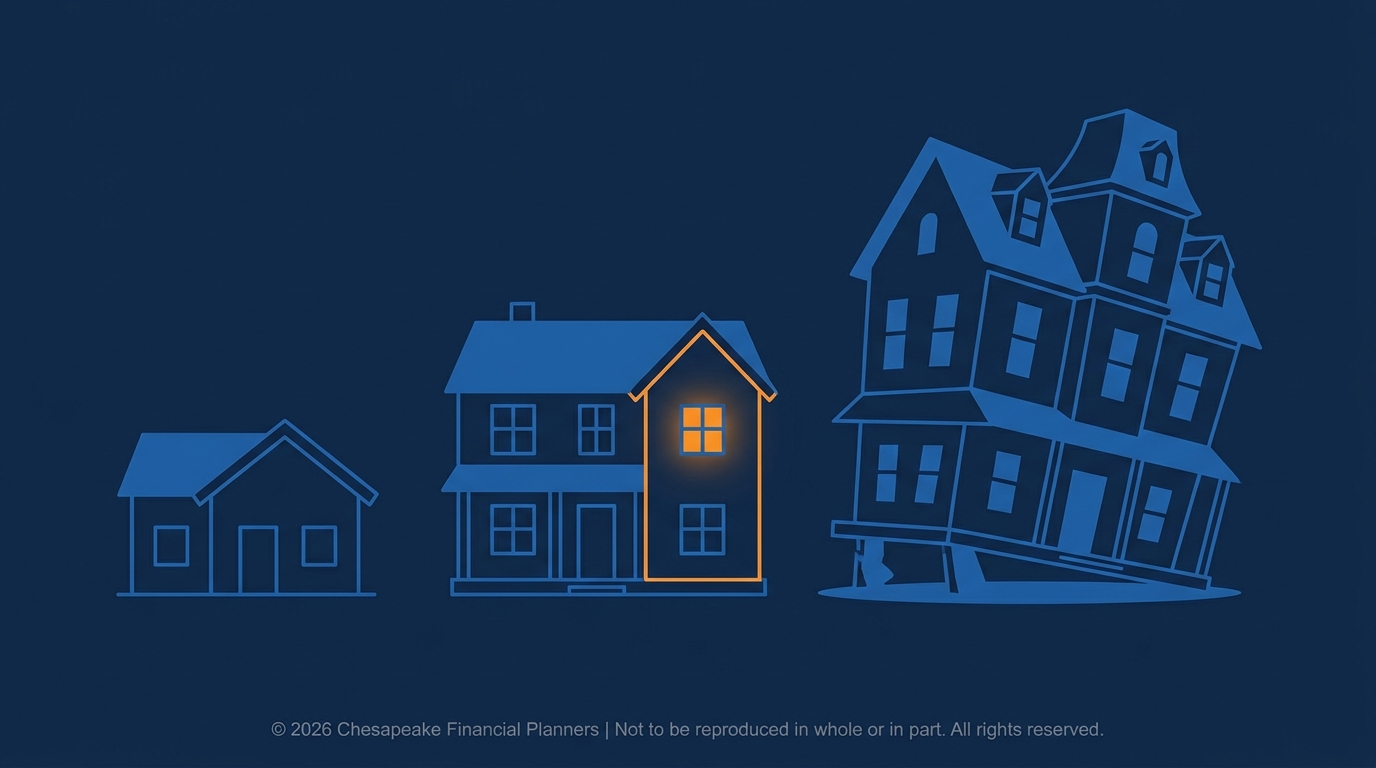
After winning the lottery, you should spend no more than 15% to 25% of your after-tax windfall on a house. A lottery winner house purchase that exceeds that range ties up too much wealth in an illiquid asset that costs money to maintain every year. If you take home $5 million after taxes, that means a home in the $750,000 to $1.25 million range, not the $2 million dream house. The goal is keeping your money liquid and working for you, not locking it into walls and a lawn.
Key Takeaways
- Cap your home at 15% to 25% of your after-tax windfall to protect liquidity and avoid cash-flow pressure.
- In 2026, the federal SALT deduction cap rose to $40,400, softening but not eliminating high property-tax pain.
- Annual ownership costs on a luxury home routinely run $75,000 to $125,000 before you furnish or enjoy it.
- Rent first. Most lottery winners who go broke do so from cascading costs, not the original purchase.
About the Author: Jeff Judge, CFP®, AEP®, ChFC®, CLU® is Managing Partner of Chesapeake Financial Planners in Forest Hill, Maryland. Jeff has watched more than one windfall recipient buy a house first and build a plan second, and the order almost always costs them. He has been helping families and business owners in Harford County and the Baltimore metro area navigate major financial decisions and sudden wealth events since earning his CFP® certification in 2013, by using Chesapeake Financial Planners’ signature process, the R.U.D.D.E.R. method™.
Why a Lottery Winner House Purchase Works Differently Than a Normal Home Buy
A normal home purchase is supported by a paycheck. Your mortgage payment comes out of recurring income, and that income keeps showing up every two weeks. A lottery windfall does not work that way. It is a lump sum. Once you spend it, there is no next paycheck refilling the account.
That single difference changes everything about the math. When you buy a house with windfall money, you are not just spending the purchase price. You are giving up the income that money could have earned for the rest of your life. Tie up $2 million in a house and you lose the roughly $80,000 a year that $2 million could generate at a conservative 4% withdrawal rate.
Jeff Judge tells windfall clients to think in terms of what an asset earns, not just what it costs. A house does not earn income. It consumes it. That reframe alone changes how big a home most people decide to buy.
This is where the R.U.D.D.E.R. Method™ comes in. The R.U.D.D.E.R. Method™ is Chesapeake Financial Planners' six-step planning process: Review and Recognize, Uncover and Understand, Design and Develop, Discuss and Decide, Execute and Empower, and Reassess and Refine. A house purchase should land in the Design and Develop phase, after you have reviewed the full windfall and understood your real cash-flow needs, not in the first emotional week.
What should you do when you suddenly receive a large sum of money?
What an Expensive Home Actually Costs Every Year
Say you win $5 million after taxes and buy a $2 million home outright. No mortgage, no debt. Smart, right? Not until you count the carrying costs that arrive whether you use the house or not.

Property taxes are the first surprise. According to the Tax Foundation, effective property tax rates vary widely by state, and on a $2 million home you could pay $20,000 to $50,000 or more per year in high-tax areas. The 2026 federal SALT deduction cap, now $40,400 per the IRS, helps high earners deduct more of that than the old $10,000 cap allowed, but it does not erase the bill.
Insurance is the second. Homeowners coverage on a luxury property commonly runs $5,000 to $15,000 a year, and far more in flood, wildfire, or hurricane zones, according to Insurance Information Institute data.
Then come the costs people forget entirely:
| Cost category | Typical annual range on a $2M home |
|---|---|
| Property taxes | $20,000 to $50,000+ |
| Homeowners insurance | $5,000 to $15,000 |
| Maintenance (1%–2% of value) | $20,000 to $40,000 |
| Utilities | $12,000 to $36,000 |
| Landscaping, cleaning, security | $10,000 to $25,000 |
Add it up and you are looking at $75,000 to $125,000 a year just to own the house. That is before furniture, before a renovation, before you enjoy a single weekend in it. If you parked $2 million of a $5 million windfall in the home, you now have $3 million left and you are spending a meaningful share of that money's income just to keep the lights on.
The 25% Rule, and Why Winners Should Aim Lower
A reliable guideline: your home should represent no more than 25% of your total net worth. For lottery winners, Jeff Judge argues the number should sit closer to 15% to 20% in the first few years, while you are still learning what your new life actually requires.
The reason is liquidity. You need flexibility, an emergency cushion, and money invested and producing income. An oversized house does the opposite of all three. It locks up capital, costs money to hold, and is slow and expensive to sell if you need cash fast.
If you won $5 million after taxes, a home in the $750,000 to $1 million range leaves you with roughly $4 million to invest. At a 4% withdrawal rate, that capital can generate around $160,000 a year, which comfortably covers your housing costs and a strong lifestyle without ever touching principal. Win $20 million and yes, a $3 million home is reasonable. But push past $5 million on the house and the same cash-flow pressure shows up at a higher altitude.
What happens to my finances after a liquidity event?
The Lifestyle Inflation Trap That Follows the Front Door
Here is the pattern that quietly bankrupts lottery winners. They do not lose the money in one bad purchase. They lose it in the cascade that follows.
You buy a $2 million house. Now the old furniture looks wrong, so you spend on high-end pieces. The house begs to be shown off, so you host more. You hire help to manage it. You buy a car that matches the driveway. Your new neighbors live a certain way, and your spending baseline drifts up to meet theirs. None of these decisions feels reckless on its own. Together they double your burn rate within a year.
The house is rarely the problem by itself. It is the anchor that drags every other expense upward with it. That is why the size of your first home purchase matters far more than the number on the price tag suggests.
What should you tell family after winning the lottery?
What to Do Instead
Rent first. You do not have to buy anything in the first six months. Lease a nice place, settle your nerves, and let your new financial reality become normal before you make a seven-figure commitment.
Build the plan before you house hunt. Model the long-term carrying costs and confirm the purchase fits a broader strategy. Assembling the right team early matters here.
Think in income terms. Buy a $1 million home instead of $2 million, invest the difference, and that extra $1 million can throw off $40,000 to $60,000 a year. That income alone can cover taxes, insurance, and maintenance without ever touching the principal.
Be honest about square footage. A 6,000-square-foot house sounds incredible until you realize you live in three rooms and clean ten. Buy the home you will use, not the one that photographs well.
What professionals does a lottery winner need to hire first?
Frequently Asked Questions
How much of my lottery winnings should go toward a house?
Spend no more than 15% to 25% of your after-tax windfall on a house. For a $5 million net win, that puts you in the $750,000 to $1.25 million range. Keeping the home in that band preserves the liquidity and investment income that make a windfall last for decades.
Should I pay cash for a house after winning the lottery?
Paying cash avoids debt, but it is not automatically the smartest move. A low-rate mortgage lets you keep more money invested, where it can earn more than the loan costs. Run both scenarios with an advisor before tying up a large share of your windfall in one illiquid asset.
What are the hidden costs of owning an expensive home?
Beyond the purchase price, expect property taxes of $20,000 to $50,000-plus, insurance of $5,000 to $15,000, maintenance at 1% to 2% of value, and significant utility and service costs. On a $2 million home, total annual carrying costs commonly reach $75,000 to $125,000 before you furnish or enjoy the property.
How does the 2026 SALT deduction cap affect a high-value home purchase?
The 2026 federal SALT deduction cap rose to $40,400, according to the IRS, up from the previous $10,000 limit. That lets buyers in high-property-tax states deduct more of their state and local taxes. It softens the annual tax burden of an expensive home but does not eliminate it, so factor the real after-deduction cost into your decision.
Why do so many lottery winners end up broke after buying a house?
Most winners go broke from lifestyle inflation, not the original purchase. An expensive home triggers cascading costs: new furniture, staff, a matching car, and a higher-spending social circle. These follow-on expenses, combined with the home's carrying costs, quietly drain a windfall far faster than the purchase price alone suggests.
Ready to Make Smart Decisions With Your Windfall?
A sudden windfall is a once-in-a-lifetime chance to build lasting security, and the house you buy in year one shapes everything that follows. If you found this helpful, our windfall planning guide walks through every major decision sudden wealth brings, from housing to taxes to protecting your money. Download it at chesapeakefp.com and make your lottery winner house purchase the start of a plan, not the end of your windfall.
Want to go deeper? Our First 90 Days After a Windfall walks through this step by step.
Disclosures
The information provided is for educational purposes only and should not be construed as investment advice. Investment strategies should be tailored to individual circumstances, risk tolerance, and goals. Past performance doesn't guarantee future results. Consult with qualified financial professionals regarding your specific situation.
The CAP® is the property of The American College of Financial Services, which reserves sole rights to its use, and is used by permission.
This information is not intended to be a substitute for specific individualized tax, investment or legal advice. We suggest that you discuss your specific situation with a qualified tax, legal or financial advisor.
Advisors associated with Chesapeake Financial Planners may be either (1) LPL Financial Registered Representatives offering securities through LPL Financial, Member FINRA and SIPC, and investment advisor representatives offering investment advice through Great Valley Advisor Group; or (2) solely investment advisor representatives offering investment advice through Great Valley Advisor Group and not affiliated with LPL Financial. Great Valley Advisor Group, and Chesapeake Financial Planners are separate entities from LPL Financial.


