
What Is an Index Fund?
Last reviewed: July 2026
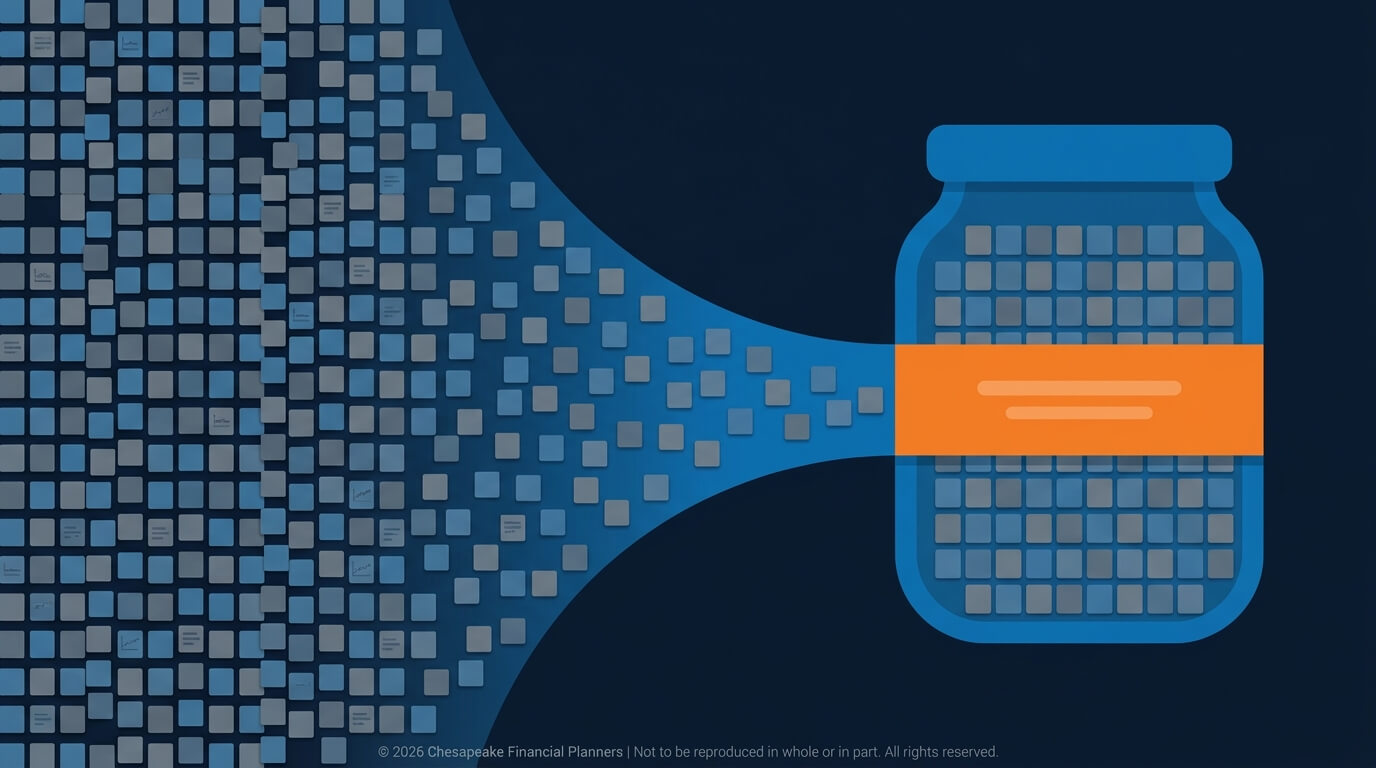
An index fund is a type of mutual fund or exchange-traded fund (ETF) built to track the performance of a specific market index, like the S&P 500. Instead of paying a manager to pick winning stocks, you own a small slice of every company in the index. That single design choice is why index funds cost so little and why they have quietly become the default building block for most everyday investors.
Key Takeaways
- An index fund tracks a market index automatically, so it holds every stock in that index rather than relying on a manager's stock picks.
- Index funds are cheap: the asset-weighted average expense ratio for index equity funds was 0.05% in 2024, according to the Investment Company Institute.
- Most actively managed U.S. stock funds fail to beat their index over time, which is the core argument for passive investing.
- You can buy an S&P 500 index fund through almost any brokerage, often with no minimum and no trading commission.
About the Author: Jeff Judge, CFP®, AEP®, ChFC®, CLU® is Managing Partner of Chesapeake Financial Planners in Forest Hill, Maryland. He has been helping families and business owners in Harford County and the Baltimore metro area navigate investment decisions since earning his CFP® certification in 2013, by using Chesapeake Financial Planners’ signature process, the R.U.D.D.E.R. method™. Jeff often tells new investors that the boring fund is usually the one that wins, because the money you don't pay in fees compounds right alongside your returns.
How Does an Index Fund Actually Work?
An index fund works by buying and holding the same securities that make up a published market index, in the same proportions. If a company represents 6% of the S&P 500, it represents roughly 6% of your S&P 500 index fund. When the index changes its membership, the fund changes with it. No human is sitting at a desk deciding which stocks look promising this quarter.
This approach is called passive investing because the fund isn't trying to beat the market. It's trying to be the market. The S&P 500 is the most common index people track, but funds exist for the total U.S. stock market, international stocks, bonds, and narrow slices like technology or real estate.
Jeff Judge has watched plenty of clients overthink this. They assume something so simple can't be good. In practice, the simplicity is the advantage. Fewer trades mean fewer costs and fewer chances to make an emotional mistake at the wrong moment.
What Are the Benefits of Index Funds?
The case for index funds rests on three things: low cost, built-in diversification, and consistent long-term performance relative to active management.
Cost is the headline. According to the Investment Company Institute, the average expense ratio for index equity mutual funds was just 0.05% in 2024, compared with a much higher average for actively managed funds. On a $100,000 balance, that difference can mean hundreds of dollars a year staying in your account instead of leaving it.
Diversification comes free. Buy one total-market index fund and you own thousands of companies in a single purchase. If any one company stumbles, it barely moves your overall balance. That's a sharp contrast to owning a handful of individual stocks, where one bad earnings report can wreck your year.
Then there's performance. Industry research has consistently shown that most actively managed funds underperform their benchmark index over a 10- or 15-year period, especially after fees. You don't have to outsmart the market to do well. You just have to stop paying someone to try.

Are There Any Downsides to Index Funds?
Index funds are not magic, and a good plan accounts for what they can't do. The most obvious limitation: an index fund will never beat the market, because it is the market. If you want the chance at outsized returns, indexing isn't built for that.
Index funds also fall the full distance in a downturn. When the S&P 500 dropped sharply during the 2020 crash, every S&P 500 index fund dropped right along with it. There's no manager pulling money to cash to soften the blow. For most long-term investors that's fine, but it can feel rough if you check your balance during a bad stretch.
Finally, a market-cap-weighted index can become top-heavy. In recent years a small number of large technology companies have made up a growing share of the S&P 500, which means you're more concentrated in those names than you might realize. This is one reason How Much of My Portfolio Should Be in One Stock? matters even when you own a "diversified" fund.
How Do You Buy an Index Fund?
Buying an index fund is simpler than most people expect, and you can do it in four steps.
- Open a brokerage or retirement account. This can be a Roth IRA, a traditional IRA, a 401(k) through work, or a regular taxable brokerage account.
- Pick your index. Most beginners start with a broad U.S. stock index like the S&P 500 or a total-market fund.
- Choose the fund or ETF version. Many fund families offer both a mutual fund and an ETF tracking the same index. ETFs trade like stocks; mutual funds price once a day.
- Set up automatic contributions. Putting money in on a schedule removes the temptation to time the market.
One thing worth understanding before you buy is the How Do Investment Fees Impact My Long-Term Returns? that quietly eat into returns. Two funds tracking the same index can charge very different fees, and the cheaper one almost always wins over time.
At Chesapeake Financial Planners, index funds often show up as the core of a client's portfolio, surrounded by other pieces tailored to their tax situation and goals. We use the How should my investment mix change as I get closer to retirement? framework to decide how much belongs in stock index funds versus bond funds in the first place.
Frequently Asked Questions
What is the difference between an index fund and an ETF?
An index fund is a strategy, while an ETF is a structure. Many ETFs are index funds, and many index funds are mutual funds. The practical difference is how you trade them: ETFs trade throughout the day at market prices like a stock, and traditional index mutual funds price once at the end of each trading day.
Are index funds a good investment for beginners?
Yes, index funds are widely considered one of the best starting points for beginners because they offer instant diversification, very low costs, and require almost no ongoing management. You don't need to research individual companies or time your trades. A single broad-market index fund gives a new investor exposure to thousands of stocks in one purchase.
How much money do I need to start investing in an index fund?
You can often start with very little, since many brokerages now offer index ETFs with no minimum and no trading commission. Some traditional index mutual funds still carry minimums of $1,000 to $3,000, but the ETF version of the same index usually has no minimum at all, letting you begin with the price of a single share.
What is the S&P 500 index fund?
An S&P 500 index fund tracks the 500 largest publicly traded U.S. companies, weighted by their market value. Because these companies span many industries, the fund acts as a broad snapshot of the U.S. stock market. It is one of the most popular index funds because it offers wide exposure to large American businesses in a single, low-cost investment.
Do index funds pay dividends?
Yes, index funds pass through the dividends paid by the companies they hold. You can choose to receive these dividends as cash or reinvest them automatically to buy more shares. Reinvesting dividends is one of the simplest ways to let your investment compound, since each payout buys a little more of the fund over time.
Can you lose money in an index fund?
Yes, you can lose money in an index fund, because it rises and falls with the market it tracks. If the underlying index drops, your fund drops with it, and there's no manager moving to cash to cushion the decline. Index funds reduce the risk tied to any single company, but they don't remove overall market risk.
If you're just getting comfortable with investing, our free beginner's investing guide walks through how to build a simple, low-cost portfolio from scratch. Download it at chesapeakefp.com and take the guesswork out of your first index fund purchase.
Want to go deeper? Our R.U.D.D.E.R Audit for DIY Investors walks through this step by step.
Disclosures
The information provided is for educational purposes only and should not be construed as investment advice. Investment strategies should be tailored to individual circumstances, risk tolerance, and goals. Past performance doesn't guarantee future results. Consult with qualified financial professionals regarding your specific situation.
All indices are unmanaged and may not be invested into directly.
Advisors associated with Chesapeake Financial Planners may be either (1) LPL Financial Registered Representatives offering securities through LPL Financial, Member FINRA and SIPC, and investment advisor representatives offering investment advice through Great Valley Advisor Group; or (2) solely investment advisor representatives offering investment advice through Great Valley Advisor Group and not affiliated with LPL Financial. Great Valley Advisor Group, and Chesapeake Financial Planners are separate entities from LPL Financial.


