
How Does a Reverse Mortgage Work, and Who Is It For?
Last reviewed: July 2026
A reverse mortgage lets homeowners aged 62 and older convert part of their home equity into cash without selling the house or making monthly mortgage payments. Instead of you paying the lender each month, the lender pays you, and the loan is repaid later when you sell, move out, or pass away. A reverse mortgage can be a sensible retirement-income tool or an expensive mistake, and which one it is depends entirely on your situation.
Key Takeaways
- A reverse mortgage lets homeowners 62 and older turn home equity into cash with no required monthly payments.
- The most common type, the HECM, is insured by the FHA and requires HUD-approved counseling before you can apply.
- In 2026, the HECM lending limit is $1,249,125, the most home value the federal program will count.
- The loan balance grows over time and is repaid when you sell, move, or die, which shrinks what your heirs inherit.
About the Author: Jeff Judge, CFP®, AEP®, ChFC®, CLU® is Managing Partner of Chesapeake Financial Planners in Forest Hill, Maryland. He has been helping retirees in Harford County and the Baltimore metro area weigh home equity decisions since earning his CFP® certification in 2013, by using Chesapeake Financial Planners’ signature process, the R.U.D.D.E.R. method™. Jeff has seen reverse mortgages rescue a house-rich, cash-poor retirement and seen them quietly erode an inheritance, which is why he treats them as a tool, not a default.
What Is a Reverse Mortgage and How Does It Work?
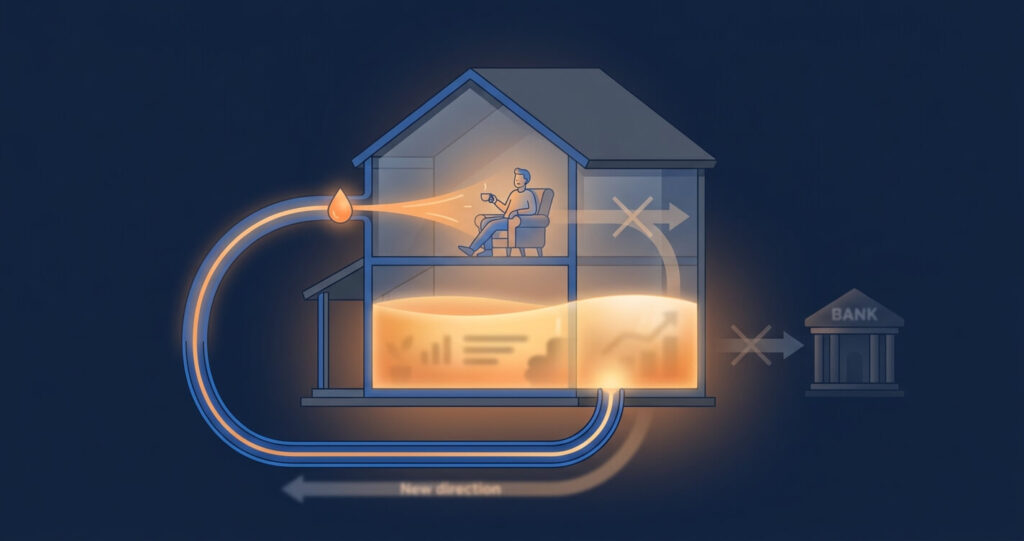
A reverse mortgage flips the usual direction of a home loan. With a regular mortgage, you send money to the lender and your balance falls. With a reverse mortgage, the lender sends money to you and your balance rises, because interest and fees are added to the loan over time rather than paid down. You keep the title and continue living in the home.
You can take the money as a lump sum, a line of credit, monthly payments, or a combination. According to the Consumer Financial Protection Bureau, you never have to make a monthly payment, but you must keep paying property taxes, homeowners insurance, and upkeep, or the loan can come due. Most reverse mortgages are non-recourse, meaning you or your heirs can never owe more than the home is worth when it is sold.
Who Qualifies for a Reverse Mortgage?
To qualify for the most common reverse mortgage, a federally insured Home Equity Conversion Mortgage, you must be at least 62 years old, own the home as your primary residence, and have substantial equity in it. The HUD program also requires you to complete counseling with an approved independent counselor before you apply, a safeguard meant to make sure you understand the costs.
There is also a ceiling on how much home value the program counts. For 2026, the HECM lending limit is $1,249,125, so equity above that amount does not increase how much you can borrow. Lenders also run a financial assessment to confirm you can keep up with taxes and insurance. The amount you can actually access depends on your age, the home's value, and current interest rates, with older borrowers generally able to draw more. This is one reason a hecm is often described as a loan that rewards patience.
What Are the Pros and Cons of a Reverse Mortgage?
A reverse mortgage is neither a miracle nor a trap; it is a trade-off. Weighing the reverse mortgage pros cons honestly is the only way to know if it fits.
| Potential benefits | Real drawbacks |
|---|---|
| Stay in your home and access equity | Upfront and ongoing fees can be high |
| No required monthly mortgage payment | The loan balance grows over time |
| Non-recourse, so you can't owe more than the home's value | Less home equity left for heirs |
| Flexible payout options | You must keep paying taxes, insurance, and upkeep |
| A line-of-credit version can grow unused | Can affect need-based benefits like Medicaid |
The biggest misunderstanding is that the home is free money. It is not. Every dollar you draw, plus interest and fees, comes out of the equity your heirs would otherwise receive, which is the central trade in any home equity retirement decision.
Who Is a Reverse Mortgage Right For, and Wrong For?
A reverse mortgage tends to suit a homeowner who is house-rich but cash-poor, wants to stay in the home for the long haul, and has no strong desire to leave that specific house to heirs. For someone who plans to age in place and needs to supplement retirement income, the no-monthly-payment feature can genuinely steady the budget. Used as a standby line of credit, it can also serve as a buffer against selling investments in a down market.
It tends to be a poor fit for anyone likely to move within a few years, since the upfront costs are hard to recover over a short stay, and for those whose main goal is leaving the home to children. Jeff Judge tells clients to ask one blunt question first: would you rather keep the house or keep the equity? If the honest answer is the equity, downsizing is often cheaper than a reverse mortgage. Compare the options in our HELOC vs Cash-Out Refinance: Which Way to Tap Home Equity? guide and weigh it against simply Pay Off Mortgage Before Retirement, or Keep Investing? before deciding.
Frequently Asked Questions
How does a reverse mortgage work?
A reverse mortgage lets a homeowner 62 or older borrow against home equity and receive money as a lump sum, line of credit, or monthly payments, with no required monthly repayment. Interest and fees are added to the balance, which grows over time. The loan is repaid when you sell, permanently move out, or pass away, usually from selling the home.
Who qualifies for a reverse mortgage?
To qualify for a federally insured HECM reverse mortgage, you must be at least 62, own and live in the home as your primary residence, hold significant equity, and complete HUD-approved counseling. Lenders also assess whether you can keep paying property taxes, insurance, and maintenance, since failing to do so can trigger repayment of the loan.
Can you lose your home with a reverse mortgage?
Yes, you can lose the home if you stop meeting the loan's conditions. Even with no monthly mortgage payment, you must keep the home as your primary residence and stay current on property taxes, homeowners insurance, and upkeep. Falling behind on those obligations, or moving out for more than 12 months, can make the loan due and lead to foreclosure.
Do you have to pay back a reverse mortgage?
Yes, a reverse mortgage is a loan that must be repaid, just not on a monthly schedule. Repayment comes due when the last borrower sells the home, moves out permanently, or dies. At that point the loan, including accrued interest and fees, is paid off, typically by selling the house, with any remaining equity going to you or your heirs.
What happens to a reverse mortgage when you die?
When the last borrower dies, the reverse mortgage becomes due, and the heirs typically have a set period to decide what to do. They can repay the balance and keep the home, often by refinancing, or sell the home to pay off the loan and keep any leftover equity. Because it is non-recourse, they never owe more than the home's value.
A reverse mortgage is a serious, sometimes useful tool that deserves a clear-eyed look at both sides. If you want to stay in your home and need income, it can help; if you want to preserve an inheritance or expect to move, it usually does not. If you want a simple framework for weighing home equity, income, and retirement, our What are the fundamentals of personal financial planning? walks through it step by step. Download it at chesapeakefp.com. Jeff Judge notes: "A reverse mortgage can make real sense for someone committed to aging in place who needs to bridge an income gap, but if preserving something for your heirs matters to you, that has to be part of the conversation before you sign anything."
Want to go deeper? Our 10 Signs You're Ready for a Certified Financial Planner walks through this step by step.
This material is for educational purposes only and should not be considered tax or legal advice. Please consult with your tax advisor or attorney regarding your specific situation.
The opinions voiced in this material are for general information only and are not intended to provide specific advice or recommendations for any individual.
All investing involves risk including loss of principal. No strategy assures success or protects against loss.
There is no guarantee that a diversified portfolio will enhance overall returns or outperform a non-diversified portfolio. Diversification does not protect against market risk.
Disclosures
The information provided is for educational purposes only and should not be construed as investment advice. Investment strategies should be tailored to individual circumstances, risk tolerance, and goals. Past performance doesn't guarantee future results. Consult with qualified financial professionals regarding your specific situation.
Advisors associated with Chesapeake Financial Planners may be either (1) LPL Financial Registered Representatives offering securities through LPL Financial, Member FINRA and SIPC, and investment advisor representatives offering investment advice through Great Valley Advisor Group; or (2) solely investment advisor representatives offering investment advice through Great Valley Advisor Group and not affiliated with LPL Financial. Great Valley Advisor Group, and Chesapeake Financial Planners are separate entities from LPL Financial.


