

Last reviewed: September 2026
Yes, if the policy was sized once years ago and never revisited, it is very likely putting the business at risk today. A key person insurance coverage gap shows up whenever the policy face amount was set at a loan closing and never adjusted as the business grew. The coverage still exists and the premium still gets paid, but the dollar amount behind it no longer reflects what the business would actually need to survive losing the person it insures. Most owners don't find this gap by checking their policy. They find it because someone asked a hard question at the worst possible time.
Key Takeaways
- Key person insurance pays the business, not the owner's family, so it solves a survival problem, not an inheritance problem.
- Coverage tied to a bank loan is usually sized once at closing and rarely revisited as revenue and payroll grow.
- Maryland taxes business equity as part of a taxable estate, and the state's $5,000,000 per-person exemption sits well below the federal level, so a growing business can quietly approach it.
- A loan renewal, a revenue jump, a new key employee, or a buy-sell update are the four moments that should trigger a coverage review.
About the Author: Jeff Judge, CFP®, AEP®, ChFC®, CLU® is Managing Partner of Chesapeake Financial Planners in Forest Hill, Maryland. He has spent years helping business owners across Harford County and the Baltimore metro area coordinate the insurance behind their loans, their buy-sell agreements, and their exit plans, using Chesapeake's signature process, the R.U.D.D.E.R. Method™. "The policy is almost never the problem. It's that nobody put a date on the calendar to look at it again."
What Does Key Person Insurance Actually Cover?
Key person insurance is a policy the business owns on the life of someone whose absence would meaningfully hurt the company: an owner, a founder, or an employee whose relationships or specialized knowledge the business depends on. The business pays the premium and is named the beneficiary, so if that person dies, the payout goes to the company itself, not to their family.
The purpose is narrow and practical. The payout gives the business cash exactly when it needs it most:
- Money to cover a revenue gap while a replacement is found and trained.
- Money to reassure vendors and lenders that the company can absorb the loss.
- Money to buy the remaining leadership team time to make good decisions instead of panicked ones.
It doesn't transfer any ownership stake, and it doesn't require the insured person to own equity at all. A key employee with zero shares can still be exactly the person this coverage is meant to protect.
Does key person insurance replace the owner's own life insurance?
No, it doesn't. Personal life insurance protects the owner's family and their personal financial plan; key person insurance protects the business itself and is owned and paid for by the company. Most business owners need both, sized independently, because they solve two different problems for two different beneficiaries.
How Is Key Person Insurance Different From Buy-Sell Funding?
A buy-sell agreement spells out what happens to an owner's stake in the business if they die, become disabled, or leave. The life insurance that funds it exists to give the remaining owners, or the business itself, the cash to actually buy that stake at the value the agreement specifies. Without funding behind it, a buy-sell agreement is a set of promises with no mechanism to keep them.
"I've seen this exact mismatch surface during a business sale process, where the buy-sell agreement pointed to one valuation and the funding policy behind it was sized for a business worth a fraction of that number."
Jeff Judge, CFP®
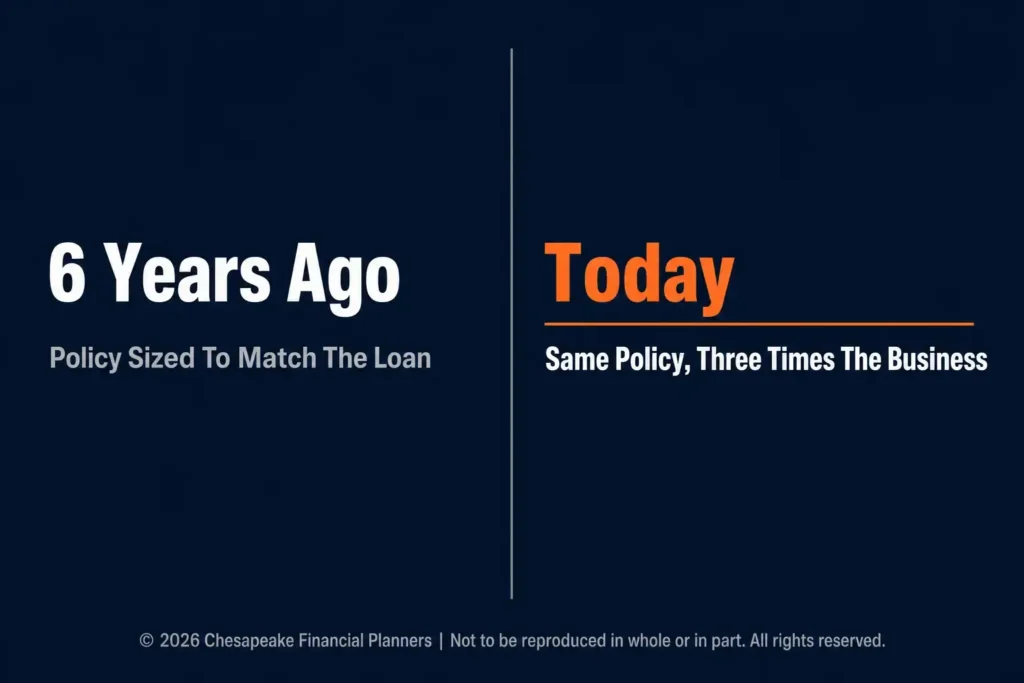
Key person insurance solves a different problem. It puts cash into the business to help it survive the operational shock of losing someone critical, whether or not that person held any equity. Owners often assume a single policy is doing both jobs at once: covering the bank loan and standing in for buy-sell funding. In most cases it does neither job completely, because it was sized for the bank's comfort when the loan closed, not for what a buyout would cost today or what the business would need to keep operating through a real transition.
Why Does the Key Person Insurance Coverage Gap Widen Over Time?
Here's the pattern that shows up most often. A lender requires key person coverage as a condition of financing, often through the SBA's 7(a) or 504 loan programs, and the coverage gets collaterally assigned so the bank has a claim on the proceeds up to the loan balance. The policy gets put in place, the loan closes, and the box gets checked. Nobody puts a date on the calendar to revisit it.
Meanwhile the business keeps growing. Revenue climbs, the team gets bigger, and the company takes on new debt for equipment, a second location, or working capital. Each change increases what the business would need to survive losing its key person, and none of them automatically increases the coverage on that original policy. The result is a policy that was sized appropriately once and has quietly fallen behind ever since.
Local business owners in Harford County face a version of this that most national coverage on the topic skips entirely. Picture a typical Harford County contractor or professional-services firm that used an SBA-backed loan to buy out a retiring partner: the bank required a key person policy at origination, sized to the loan, and nobody has looked at it since. That pattern repeats across owner-operated businesses from Bel Air to Aberdeen to the Baltimore metro, because the lender's paperwork is usually the only reason the coverage exists in the first place.
In Maryland, a business owner's equity in the company counts toward their taxable estate, and Maryland is one of the few states with its own estate tax on top of the federal one. The state's $5,000,000 per-person exemption is far below the federal threshold, so a business that has tripled in value since a loan closed can push an owner's estate closer to that number without anyone noticing.
Should the business or the owner personally own the key person policy?
In Maryland, this choice changes more than who pays the premium. A policy owned and funded by the business keeps the cash value and death benefit out of the owner's personal taxable estate, while a policy owned personally by the owner, even if it insures a key employee, can pull that value directly into the estate and push it closer to the state's $5,000,000 exemption. At Chesapeake Financial Planners in Forest Hill, we walk business owners through this ownership question before the policy is ever bound, not after the estate tax return is due.
At Chesapeake, coverage review is not a one-time favor. It is built into the R.U.D.D.E.R. Method™, the firm's six-step planning process: Review and Recognize, Uncover and Understand, Design and Develop, Discuss and Decide, Execute and Empower, and Reassess and Refine. The Reassess and Refine step is where a stale key person policy gets caught on a schedule, alongside the business's revenue, payroll, and estate exposure, rather than waiting for a lender, a lawsuit, or a Maryland estate tax return to raise the question first.
What Triggers Should Prompt a Coverage Review?
Coverage doesn't need a review every year, but there are specific moments where skipping one leaves real money on the table.
| Review Trigger | Why It Matters |
|---|---|
| Loan renewal or refinance | The bank is already revisiting terms, making it a natural point to check whether collaterally assigned coverage still matches the current balance. |
| Significant revenue or payroll growth | Both are reasonable proxies for how much the business has grown since the policy was last sized. |
| Adding a second key person | An operations lead or partner whose knowledge is as concentrated as the founder's often means the business needs a second policy, not a bigger version of the first. |
| A buy-sell agreement update | If the valuation formula changed and nobody checked the funding insurance behind it, the agreement and the money meant to execute it may no longer match. |
A buy-sell update is the trigger most likely to expose the confusion between the two coverage types, because it's the moment an attorney, a CPA, and an advisor should all be looking at the same numbers at once. The attorney drafts or updates the agreement. The CPA understands how a payout would be taxed and how it interacts with the business's financials, including how the 20% qualified business income deduction factors into the owner's broader tax picture. The advisor checks whether the coverage amounts still make sense against the business's current value and the owner's retirement timeline. When those three conversations happen separately, or not at all, the gap described above is exactly what falls through.
What should a Harford County business owner do first to close this gap?
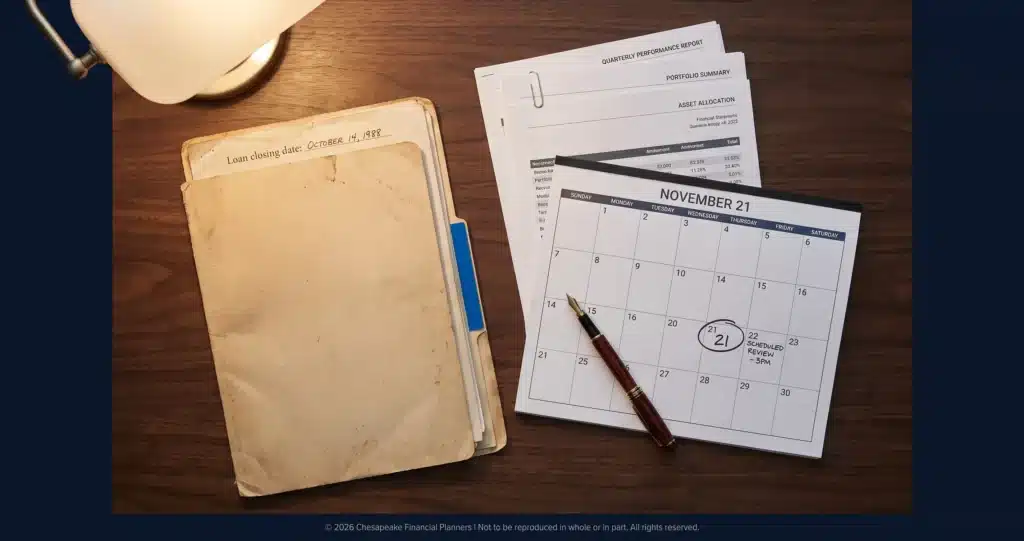
Pull the actual policy pages, not just the folder they're filed in, and check the face amount against this year's revenue, payroll, and loan balance rather than the numbers from the year the paperwork was signed. That single step usually shows whether the gap is real before a lender renewal or a buy-sell update forces the question.
Is Disability Coverage the Blind Spot in Your Key Person Plan?
Most conversations about key person coverage start and stop at death, because that's the scenario a bank's loan paperwork usually names explicitly. It's rarely the only scenario worth planning for. A key person who becomes disabled and can't work for an extended stretch creates many of the same problems as a death: the same revenue gap, the same vendor and client uncertainty, the same need for cash while the business figures out its next move, but without the clean trigger of a life insurance claim.
Disability coverage on a key person also works differently than most owners expect. Where a death benefit typically pays out as a single lump sum, disability coverage on a key person is usually structured to pay over time, replacing lost value to the business during a defined benefit period rather than all at once. Owners who have carefully funded the death scenario have, more often than not, given no thought at all to what happens if the same person is alive, still on payroll in name, and unable to run the parts of the business that depend on them. Jeff Judge has watched this exact blind spot cost businesses more in lost momentum than the eventual death benefit would have paid out, simply because nobody structured coverage for the slower, messier version of the same risk.
None of this requires an overhaul, just pulling the actual policy documents and checking that number against where the business stands today, not where it stood when the paperwork was signed. If a buy-sell agreement hasn't been reviewed alongside its funding, or your business exit plan doesn't account for what a key person loss would cost, that's worth a conversation before the next lender renewal or ownership change forces the question.
Frequently Asked Questions
What is key person insurance?
Key person insurance is a policy a business owns on the life of an owner, founder, or employee whose absence would meaningfully damage the company. The business pays the premium and is the named beneficiary, so a death benefit is paid directly to the company to help cover the revenue gap, hiring costs, and vendor or lender uncertainty that follow losing someone critical. It does not pay the insured person's family and does not transfer any ownership interest.
Is key person insurance the same as buy-sell insurance?
No, they are different coverages that solve different problems. Buy-sell insurance funds the purchase of a departing or deceased owner's equity stake under the terms of a buy-sell agreement, while key person insurance gives the business operating cash to survive the loss of someone critical, regardless of whether that person owned any equity at all. A business can need one, both, or neither depending on its ownership structure.
How much key person insurance coverage do I need?
Coverage should reflect what the business needs to survive twelve to eighteen months of disruption, factoring in current revenue, payroll, outstanding debt, and how concentrated the company's client relationships are around that person, not the balance of an old loan. A business that has doubled or tripled since its original policy was sized needs a coverage amount reviewed against today's numbers.
Are key person insurance premiums tax deductible?
Generally no. Under longstanding IRS rules, premiums a business pays for life insurance on an owner, officer, or employee are not deductible as a business expense when the business is directly or indirectly a beneficiary of the policy. The tradeoff is that the eventual death benefit is generally received income tax-free by the business, which is the point of the coverage in the first place.
Does key person insurance cover disability, not just death?
Key person insurance can include a disability component, but many policies only address death because that's the scenario a lender's paperwork typically requires. Disability coverage for a key person is usually structured to pay the business over a defined benefit period rather than as a single lump sum, replacing lost value while the business adjusts to losing that person's day-to-day contribution, and it needs to be requested and underwritten separately from the death benefit.
Ready to Check Your Coverage?
Jeff Judge and the Chesapeake Financial Planners team work with business owners across Harford County and the Baltimore metro to close a key person insurance coverage gap before a lender, a buy-sell update, or a real loss forces the question. Schedule a no-obligation fit call at chesapeakefp.com to pull the actual policy numbers and see where the gap might be.
A version of this article was originally published on Chesapeake Financial Planners' LinkedIn.
Disclosures
The information provided is for educational purposes only and should not be construed as investment advice. Investment strategies should be tailored to individual circumstances, risk tolerance, and goals. Past performance doesn't guarantee future results. Consult with qualified financial professionals regarding your specific situation.
This material is for educational purposes only. Insurance products contain exclusions, limitations, and terms for keeping them in force. Please contact a qualified insurance professional for costs and complete details.
Advisors associated with Chesapeake Financial Planners may be either (1) LPL Financial Registered Representatives offering securities through LPL Financial, Member FINRA and SIPC, and investment advisor representatives offering investment advice through Great Valley Advisor Group; or (2) solely investment advisor representatives offering investment advice through Great Valley Advisor Group and not affiliated with LPL Financial. Great Valley Advisor Group, and Chesapeake Financial Planners are separate entities from LPL Financial.
Chesapeake Financial Planners | 2402 Scotlon Ct, Forest Hill, MD 21050 | (410) 652-7868 | www.chesapeakefp.com
© 2026 Chesapeake Financial Planners | Not to be reproduced in whole or in part. All rights reserved.


