
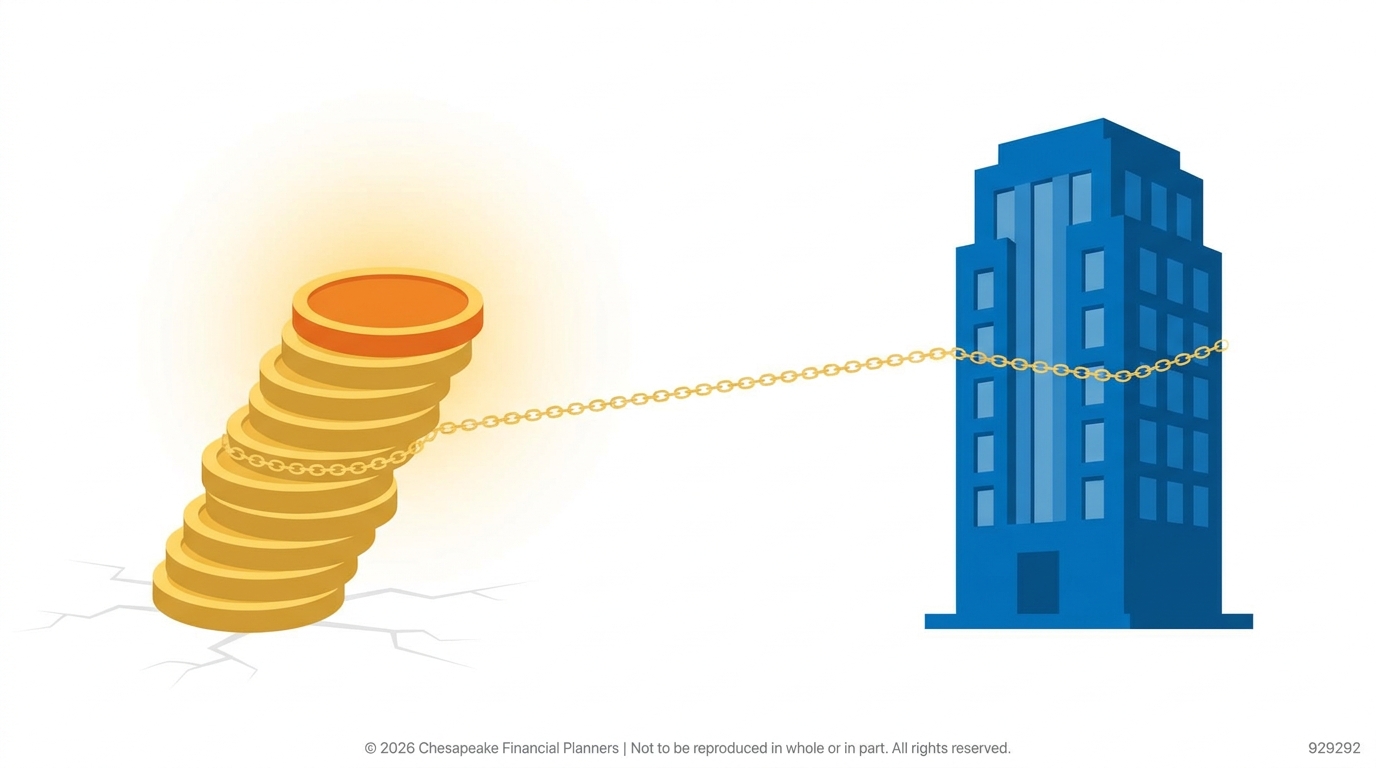
You've inherited money maybe a substantial amount. It represents years of someone's hard work, sacrifice, and hopes for your future. And now you're terrified of messing it up.
That fear isn't irrational. Research shows that 42% of people who receive inheritances see their net worth fall back to pre-inheritance levels within just one year. Not because they're foolish or reckless but because they make predictable mistakes that could have been avoided with the right knowledge and guidance.
Here's how to protect your inheritance and make sure it serves you for years to come.
Why Inheritances Get Lost
The external problem: Inherited money is vulnerable to poor investment decisions, excessive spending, tax mistakes, and predatory financial advice.
The internal problem: You feel the weight of responsibility to honor your loved one's legacy, but you're uncertain about how to manage money at this level; and worried about making irreversible mistakes.
The philosophical problem: This inheritance represents someone's life work. You ought to be able to honor that legacy while also improving your own financial life—but doing both requires knowledge most people don't have.
Let's walk through the most common ways inheritances get lost—and exactly how to avoid each one.
The 7 Ways People Lose Inheritances (and How to Avoid Them)
1. Spending It Too Quickly
What happens: You receive a lump sum and it feels enormous—until it doesn't. A new car, home renovations, a vacation, helping family members, upgrading your lifestyle. Within months or a couple of years, the money is gone.
Why it happens: Sudden money creates a false sense of security. Without a spending plan, lifestyle inflation happens gradually and then suddenly.
How to avoid it:
- Park the money for 90 days in a high-yield savings account or money market fund. Give yourself time to think.
- Calculate your "safe spending rate"—typically 3-4% annually from invested assets. If you inherited $200,000, that's $6,000-$8,000 per year, not $200,000 to spend.
- Set aside a small portion (5-10%) for guilt-free spending or meaningful purchases, then invest the rest.
- Resist lifestyle inflation. Just because you have more money doesn't mean you need a bigger house or fancier car.
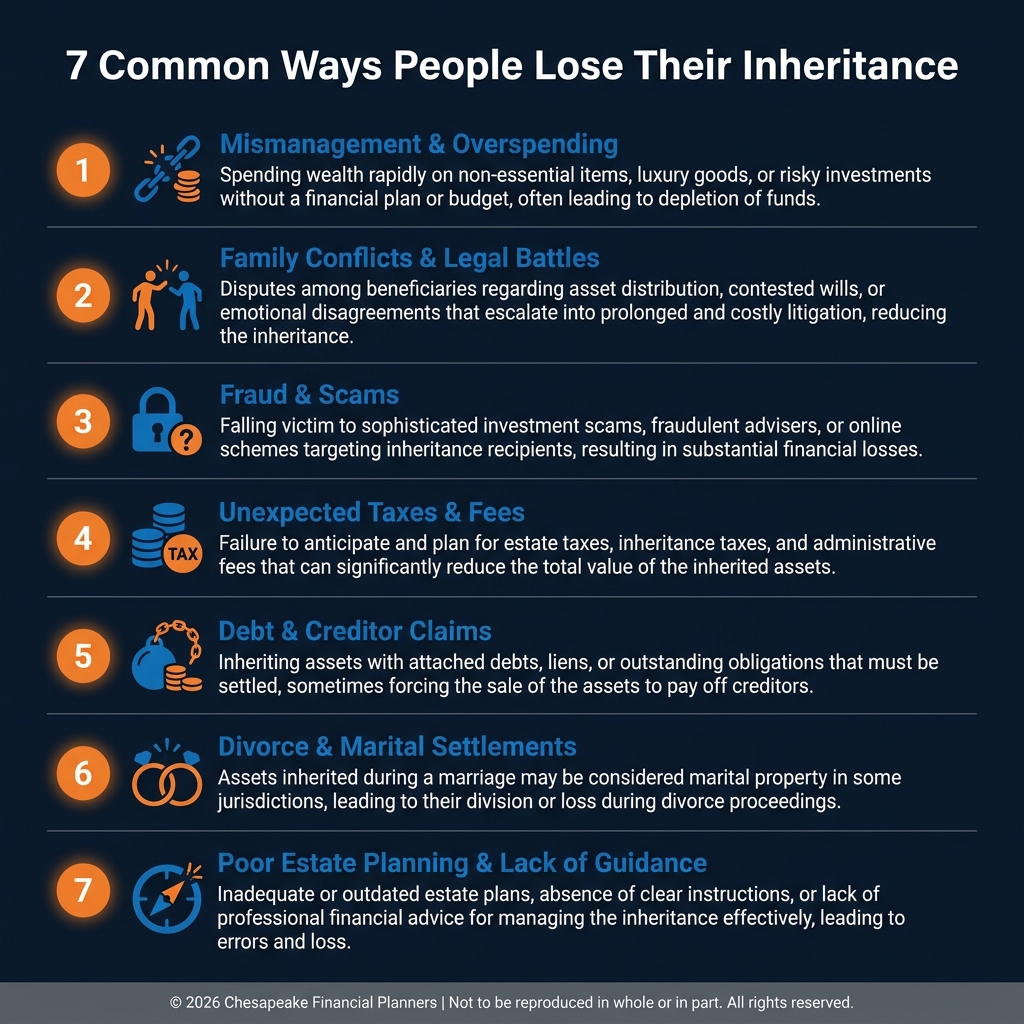
2. Investing Without a Strategy
What happens: You feel pressure to "do something" with the money. A broker calls with investment ideas. A friend mentions a hot stock. You invest without understanding risk, fees, or how it fits your overall financial picture—and lose money.
Why it happens: Lack of investment knowledge combined with pressure to act quickly. Financial salespeople target people who've recently inherited money.
How to avoid it:
- Don't invest until you have a plan. Rushing leads to mistakes.
- Work with a fiduciary financial advisor who's legally obligated to act in your best interest, not sell you products.
- Diversify broadly. Don't put all your inheritance into one stock, one investment, or one strategy.
- Understand fees. High-fee products (annuities, actively managed funds, structured products) quietly drain wealth over time.
- Match investments to your timeline. Short-term needs (less than 3 years) should be in safe, liquid accounts. Long-term money can be invested for growth.
3. Ignoring Taxes
What happens: You inherit an IRA or 401(k) and don't understand the withdrawal rules. You sell inherited property or stocks without considering capital gains. You gift money without knowing the tax implications. These mistakes cost tens of thousands in unnecessary taxes.
Why it happens: Tax rules for inheritances are complex and changed significantly in recent years. Most people don't know what they don't know.
How to avoid it:
Inherited IRAs: The SECURE Act requires most beneficiaries to withdraw all funds within 10 years. If you don't plan withdrawals strategically, you could face a massive tax bill. Work with a CPA or financial planner to model optimal withdrawal timing.
Inherited taxable accounts: You typically receive a "step-up in basis," meaning you can sell inherited investments without paying capital gains on appreciation that occurred during the original owner's lifetime. Take advantage of this.
Inherited property: If you sell an inherited home, understand the tax implications. You may owe capital gains on appreciation after the date of inheritance.
Gifting: You can gift up to $19,000 per person per year (2026 limit) without gift tax consequences. Larger gifts require filing a gift tax return.
Consult professionals: Don't DIY complex tax situations. A tax mistake can cost you far more than the fee for expert advice.
4. Falling for Bad Investment Advice
What happens: You trust the wrong person—a commissioned salesperson, an unqualified "advisor," or even a family member—and end up in high-fee, high-risk, or inappropriate investments.
Why it happens: After an inheritance, everyone suddenly has advice. It's hard to know who to trust.
How to avoid it:
- Work only with fiduciary advisors. They're legally required to put your interests first.
- Understand how they're compensated. Fee-only or fee-based advisors are more transparent than commission-based salespeople.
- Be skeptical of "too good to be true" returns. If someone promises guaranteed high returns with no risk, walk away.
- Avoid complex products you don't understand. If you can't explain how an investment works, don't buy it.
- Check credentials. Verify licenses and look up disciplinary history on FINRA BrokerCheck or the SEC's Investment Adviser Public Disclosure database.
5. Mixing the Inheritance with Other Money
What happens: The inheritance goes into your regular checking account and gets spent on everyday expenses. Within months, it's impossible to track where it went.
Why it happens: Lack of boundaries around inherited money makes it feel less important to protect.
How to avoid it:
- Open a separate account for the inheritance. This creates psychological separation.
- Treat it as sacred. This isn't your emergency fund or vacation money—it's wealth that should be preserved and grown.
- Create a written plan for how and when you'll use these funds.
- Automate investing. Set up automatic transfers to investment accounts so the money is working for you, not sitting idle or getting spent.
6. Lending or Giving It Away
What happens: Family or friends ask for money. You feel obligated to help. Before you know it, a significant portion of your inheritance is gone—and you may never get it back.
Why it happens: Guilt, pressure, and the mistaken belief that you have "extra" money to give away.
How to avoid it:
- Establish boundaries early. Decide in advance how much (if any) you're willing to gift or lend.
- Don't lend money you can't afford to lose. Loans to family rarely get repaid.
- Say no without guilt. You're allowed to prioritize your own financial security.
- Blame your advisor. If saying no directly is too uncomfortable, use your financial planner as a buffer: "I need to check with my advisor first."
- If you do gift money, do it intentionally—not reactively. Set a specific dollar limit and stick to it.
7. Failing to Integrate It Into a Long-Term Plan
What happens: The inheritance just sits in a savings account earning minimal interest. Or it gets spent gradually without intentionality. Either way, it doesn't improve your financial future the way it could have.
Why it happens: No plan means no progress. Without clear goals and priorities, inherited money either gets ignored or misused.
How to avoid it:
- Define your financial goals. What do you want this inheritance to accomplish? Early retirement? Financial security? Education funding? Leaving a legacy?
- Prioritize. You can't do everything at once. Rank your goals and focus on the top two or three.
- Pay off high-interest debt first. Credit cards, personal loans, and other high-interest debt should be eliminated immediately.
- Build or strengthen your emergency fund. Six months of expenses in a liquid account.
- Max out retirement contributions. Use the inheritance to free up cash flow for maxing out 401(k) and IRA contributions.
- Invest the rest. Build a diversified portfolio aligned with your goals and risk tolerance.
The One Thing You Must Do
If you remember nothing else from this article, remember this: Don't rush.
Almost every mistake people make with inheritances stems from acting too quickly—whether that's spending, investing, or giving money away.
Give yourself 90 days to pause, think, and plan. Park the money in a safe account, educate yourself, consult professionals, and make decisions deliberately.
There's no deadline. No urgency. No pressure to act immediately. The best financial decisions are made slowly and intentionally.

How a Financial Planner Can Help
A financial planner specializing in inheritances can help you:
- Develop a comprehensive strategy before you make any major decisions
- Model different scenarios (paying off debt, investing, spending) to see the long-term impact
- Navigate complex tax rules to minimize your liability
- Build an investment portfolio aligned to your goals
- Establish boundaries around lending, gifting, and spending
- Coordinate with CPAs and estate attorneys
- Provide ongoing accountability and adjustments
The cost of professional advice is a fraction of what you'll save by avoiding costly mistakes.
Your Next Step
If you've inherited money, don't let it slip away. Take these steps now:
- Park your inheritance in a separate, safe account
- Give yourself 90 days to pause and plan
- Educate yourself about common inheritance mistakes
- Consult a fiduciary financial planner who specializes in inheritances
- Create a written plan with clear goals and priorities
An inheritance is both a gift and a responsibility. With the right approach, you can honor your loved one's legacy while building lasting financial security for yourself.
Inherited money and want to protect it? Schedule a complimentary consultation. We'll help you develop a comprehensive strategy to preserve your inheritance, avoid costly mistakes, and use it to strengthen your financial future.
This material is for informational purposes only and should not be construed as tax or legal advice. Please consult with a qualified professional regarding your individual situation.
The opinions voiced in this material are for general information only and are not intended to provide specific advice or recommendations for any individual.
Advisors associated with Chesapeake Financial Planners may be either (1) LPL Financial Registered Representatives offering securities through LPL Financial, Member FINRA and SIPC, and investment advisor representatives offering investment advice through Great Valley Advisor Group; or (2) solely investment advisor representatives offering investment advice through Great Valley Advisor Group and not affiliated with LPL Financial. Great Valley Advisor Group, and Chesapeake Financial Planners are separate entities from LPL Financial.
Chesapeake Financial Planners | 2402 Scotlon Ct, Forest Hill, MD 21050 | (410) 652-7868 | www.chesapeakefp.com
© 2026 Chesapeake Financial Planners | Not to be reproduced in whole or in part. All rights reserved.


