

You've received an inheritance. The estate has settled. The assets are in your name. And now you're wondering: Does this change my financial plan?
Short answer: Yes. Almost always.
An inheritance—whether it's $50,000 or $5 million—changes your financial picture. And your financial plan should reflect that new reality.
Here's how to think through what needs to change (and what should stay the same).
Why Your Plan Needs to Be Updated
Financial plans are built on assumptions: your income, your expenses, your assets, your timeline, your goals. An inheritance disrupts several of those assumptions.
- Your asset base changed. You have more wealth than you did before. That affects your investment strategy, your risk tolerance, and your ability to achieve goals.
- Your goals may have changed. Maybe you were working toward early retirement, but couldn't quite get there. Or you wanted to start a business but lacked capital. Or you hoped to help your kids with college but couldn't afford it. The inheritance might make those things possible.
- Your timeline shifted. Depending on the size of the inheritance, you might be able to retire sooner, take career risks you couldn't before, or achieve financial independence faster than planned.
- Your tax situation is different. An inheritance can push you into higher tax brackets, especially if you inherited a traditional IRA or 401(k) that requires distributions over 10 years.
- Your risk profile evolved. With more assets, you may be able to take less risk in your portfolio and still achieve your goals. Or, conversely, you might now have enough safety net to take strategic risks you couldn't before.

Questions to Ask Yourself
Before you start making changes, reflect on what matters most to you.
- What were my goals before the inheritance? Have they changed? Or have they simply become more achievable?
- What did I wish I could do but couldn't afford? Early retirement? Career change? Start a business? Help family? Travel? Education? Now that you have more resources, which of these are still important to you?
- What do I want this inheritance to do for me? Provide security? Generate income? Fund a specific goal? Leave a legacy? There's no wrong answer, but clarity matters.
- Am I financially prepared for the inheritance? Do you have the knowledge, discipline, and support to manage the wealth responsibly? Or do you need to build those systems first?
- What would the person who left me this inheritance want me to do with it? This isn't always relevant, but for some people, honoring the giver's values is important.
Areas of Your Plan That May Need to Change
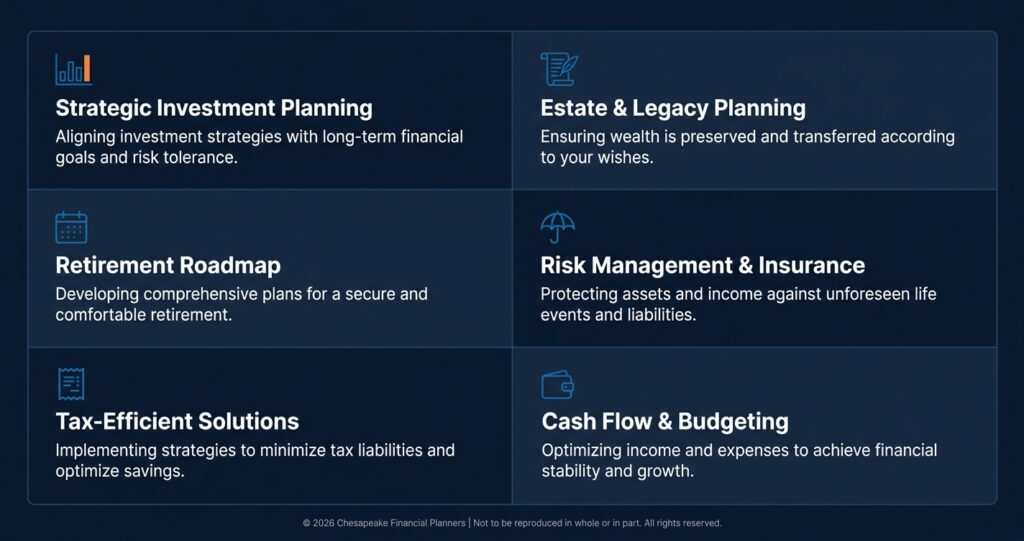
Investment Strategy
- Rebalance your portfolio. If you inherited stocks, bonds, or cash, your overall asset allocation may now be out of balance. Rebalance to get back to your target mix.
- Diversify concentrated positions. If you inherited a large holding in a single stock, consider selling some to reduce risk. The step-up in basis means you can do this with minimal tax impact.
- Adjust your risk level. With more assets, you may not need to take as much investment risk to achieve your goals. Consider dialing back to a more conservative allocation.
- Integrate inherited accounts. If you inherited IRAs, taxable accounts, or other investments, integrate them into your overall strategy. Don't manage them in isolation.
Retirement Planning
- Run new projections. Model how the inheritance affects your retirement timeline and income needs. Can you retire earlier? Do you need to save as aggressively? Can you afford a higher standard of living in retirement?
- Rethink savings rates. If the inheritance significantly boosts your net worth, you may not need to max out retirement contributions anymore. Or you might shift focus from saving to optimizing taxes and estate planning.
- Delay Social Security longer. If the inheritance gives you flexibility, delaying Social Security to age 70 can significantly increase your lifetime benefits.
Tax Planning
- Manage inherited IRA distributions. If you inherited a traditional IRA, create a 10-year withdrawal strategy that minimizes your tax burden.
- Consider Roth conversions. If the inheritance provides liquidity, you might use it to cover living expenses while doing Roth conversions from your own retirement accounts, reducing future taxable income.
- Review charitable giving. If you're charitably inclined, the inheritance might enable donor-advised funds or other tax-efficient giving strategies.
Estate Planning
- Update your own plan. An inheritance changes what you'll pass to your own heirs. Update your will, beneficiaries, and trusts accordingly.
- Consider wealth transfer strategies. If the inheritance pushed your estate above the federal exemption ($15 million per person), you may need gifting or trust strategies to minimize estate taxes.
Insurance
- Increase umbrella liability coverage. More wealth means more lawsuit risk. Increase your coverage to match your new net worth.
- Review life insurance needs. If the inheritance provides financial security for your family, you may need less life insurance. Or, if it increases your estate, you may need more for estate tax liquidity.
- Update property and casualty insurance. If you inherited real estate, art, jewelry, or other valuables, make sure they're properly insured.
Cash Flow and Spending
- Revisit your budget. You may now have more flexibility for discretionary spending. But don't let lifestyle inflation consume the inheritance. Decide intentionally how much is for spending vs. saving.
- Set aside funds for taxes. If you inherited a traditional IRA, allocate 25-30% of the inherited amount to a separate account for taxes.
- Build or strengthen your emergency fund. Use part of the inheritance to create 6-12 months of living expenses in liquid savings.
What Should NOT Change
- Your core financial values. An inheritance is a change in circumstances, not a change in who you are. If you valued saving, discipline, and long-term thinking before, those shouldn't disappear.
- Your financial guardrails. Don't abandon the spending limits, saving habits, or accountability measures that served you well before the inheritance.
- Your long-term goals (unless they've truly changed). Don't chase new goals just because you can. Make sure they're aligned with what you actually want, not what you think you "should" want now that you have more money.
How to Execute the Update
- Schedule a meeting with your financial advisor. Walk through your updated financial picture, goals, and questions. Ask them to run new projections and recommendations.
- Work with a CPA. Especially if you inherited retirement accounts or will be selling property. Tax planning is critical.
- Take your time. You don't need to implement everything at once. Prioritize the changes that have deadlines (like IRA distributions or property decisions) and phase in the rest over 6-12 months.
- Review annually. Financial plans aren't static. Your inheritance plan should be reviewed and adjusted regularly as your life and goals evolve.
The Bottom Line
An inheritance is an opportunity to accelerate goals, reduce stress, and create financial security. But it only does those things if you integrate it thoughtfully into your overall plan.
The inheritance itself doesn't guarantee financial success. What you do with it does.
We help clients update their financial plans after inheritances, ensuring that every dollar is aligned with their goals and values—not just parked somewhere or spent impulsively.
This material is for educational purposes only and should not be considered financial, tax, or investment advice. Individual circumstances vary, and financial planning strategies should be tailored to your specific situation. Consult with a qualified financial advisor and tax professional before making changes to your financial plan.
Advisors associated with Chesapeake Financial Planners may be either (1) LPL Financial Registered Representatives offering securities through LPL Financial, Member FINRA and SIPC, and investment advisor representatives offering investment advice through Great Valley Advisor Group; or (2) solely investment advisor representatives offering investment advice through Great Valley Advisor Group and not affiliated with LPL Financial. Great Valley Advisor Group, and Chesapeake Financial Planners are separate entities from LPL Financial.
Chesapeake Financial Planners | 2402 Scotlon Ct, Forest Hill, MD 21050 | (410) 652-7868 | www.chesapeakefp.com
© 2026 Chesapeake Financial Planners | Not to be reproduced in whole or in part. All rights reserved.

