

You've just received a windfall—an inheritance, a business sale, a legal settlement, or another sudden influx of money. The amount might be more than you've ever had at once. The weight of this responsibility can feel overwhelming, especially if the money came from difficult circumstances like the death of a loved one.
Here's what you should do first with inherited money or a windfall.
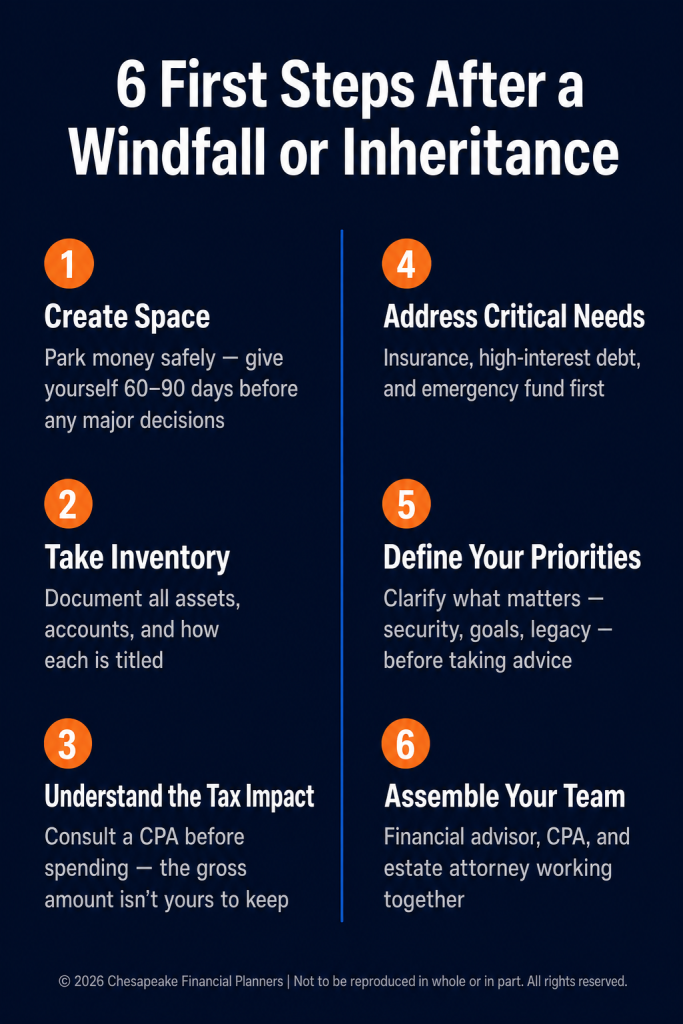
Create Space Before You Act
The most important first step is actually not taking action at all—it's creating space to think clearly. The weeks immediately following a windfall are when the most costly mistakes happen. You're processing emotions, adjusting to changed circumstances, and likely fielding advice from everyone around you.
Resist the temptation to make immediate decisions about investing, spending, or giving away your windfall. Unless you're facing genuine emergencies or critical deadlines, you have time to develop a thoughtful strategy.
Park the money temporarily in a safe, liquid account—a high-yield savings account or money market fund at an FDIC-insured institution. This keeps your money protected and accessible while you create the breathing room necessary for sound decision-making.
Give yourself 60-90 days. This isn't procrastination—it's protection against irreversible mistakes made during emotional vulnerability or excitement. The perfect investment opportunity that requires immediate action is almost never as perfect as it seems. —
Take Complete Inventory

Before you can plan what to do with your windfall, you need to understand exactly what you've received. Windfalls rarely arrive as simple cash deposits—they often involve multiple asset types, each with distinct characteristics and tax treatment.
Document everything: cash, investment accounts, retirement accounts, real estate, business interests, vehicles, life insurance proceeds, and valuable personal property. Note account numbers, institutions, approximate values, and how each asset is titled.
Pay particular attention to assets with special rules or tax implications:
Inherited retirement accounts
(IRAs, 401(k)s) come with complex distribution requirements that vary based on your relationship to the deceased and when they passed away. Mistakes here trigger severe penalties.
Real estate
May need appraisals to establish fair market value for tax purposes. Some states reassess property taxes upon transfer of ownership.
Investment accounts
Might have stepped-up cost basis (if inherited) or embedded capital gains that affect future tax obligations.
Business interests
Require professional valuation and may come with operational responsibilities or partnership obligations.
This complete inventory provides the foundation for all future planning. You can't make informed decisions without knowing exactly what you have.
Understand the Tax Implications
One of the most expensive windfall mistakes is failing to understand tax consequences before making spending or investment decisions. Different types of windfalls and different inherited assets carry vastly different tax treatment.
Inheritances
Are generally not taxable to beneficiaries (though estate taxes may apply to very large estates). However, inherited retirement accounts will be taxed as ordinary income when you take distributions, and you may face required minimum distributions within specific timeframes.
Business sale proceeds
Typically generate capital gains taxes—sometimes substantial amounts depending on your basis in the business and how the sale was structured.
Legal settlements
May be taxable or tax-free depending on what the settlement compensates. Personal injury settlements are usually tax-free, but settlements for lost wages or emotional distress may be taxable.
Stock option exercises or restricted stock vesting
Create ordinary income that's taxed at your marginal rate, potentially pushing you into the highest tax brackets.
Before you spend, invest, or commit your windfall anywhere, consult with a CPA to understand your exact tax obligations. Set aside sufficient funds to cover all taxes due. The gross amount you received is not your actual windfall—your after-tax amount is what you really have to work with.
Address Critical Immediate Needs
While you're generally pausing on major decisions, some situations require prompt attention:
- Ensure adequate insurance coverage immediately. If you've inherited property, ensure it's properly insured. If your windfall changes your net worth significantly, review liability coverage.
- Eliminate high-interest debt if you're carrying credit card balances or other obligations above 8-10% interest. The guaranteed return of paying off these debts usually beats what you can reliably earn investing.
- Build or strengthen your emergency fund. If you lack 3-6 months of expenses in liquid savings, using a portion of your windfall to establish this foundation provides invaluable peace of mind.
- Meet tax deadlines if your windfall creates estimated tax payment obligations. Missing these triggers penalties and interest.
- Update beneficiary designations on your own accounts if your circumstances have changed. These designations override your will, so keeping them current is essential.
Define Your Priorities
Before financial advisors, family members, or friends tell you what to do with your windfall, clarify what matters most to you. What role should this money play in your life?
Write down your priorities before seeking advice:
- Financial security: Does this windfall allow you to eliminate debt, build emergency reserves, or catch up on retirement savings?
- Life goals: Could this money fund education, career changes, meaningful experiences, or increased charitable giving?
- Legacy: Should some of this windfall be protected for your children or future generations?
- Current needs vs. future security: What balance makes sense between improving your life now and protecting your long-term financial future?
This clarity becomes your decision-making filter when you receive conflicting advice. You can evaluate recommendations against your own values and priorities rather than being swayed by whoever speaks most persuasively.
Resist External Pressure
Windfalls attract attention—often unwanted attention. Family members may expect help or feel entitled to a share. Friends might present investment opportunities. Distant relatives could suddenly reappear with requests.
Keep your windfall private. You're not obligated to share financial details with anyone beyond your spouse or partner and the professionals you hire to help you.
Set clear boundaries early. A simple "I'm working with advisors to make thoughtful decisions" usually closes unwanted conversations. You don't owe detailed explanations, specific amounts, or justifications for how you use the money.
If you choose to help family or make gifts, do so after developing your comprehensive plan and consulting with your advisory team about tax implications and long-term impact—not through emotional decisions made immediately after receiving your windfall.
Assemble Qualified Professional Guidance
For windfalls over $100,000—and especially over $500,000—professional guidance typically makes sense. The key is finding the right professionals and ensuring they work together rather than providing contradictory advice.
You may need:
- A financial advisor to develop investment strategies, create a wealth management plan, and coordinate your overall financial life. Look for fee-based advisors who are fiduciaries—legally required to put your interests first.
- A CPA or tax advisor to understand tax implications, plan strategically to minimize taxes, and ensure compliance with all obligations.
- An estate planning attorney if your windfall changes your estate planning needs or if you inherited assets that require legal attention.
- Insurance professionals to review coverage gaps that may have emerged.
Verify credentials, interview multiple candidates, and understand how each professional is compensated before committing. Be especially wary of commission-based salespeople who contact you unsolicited—reputable advisors don't cold-call windfall recipients.
Avoid Common Pitfalls
Watch out for these frequent mistakes:
- Acting too quickly on investment, spending, or giving decisions
- Lifestyle inflation that permanently increases expenses beyond what your windfall can sustain
- Poor investment choices driven by either excessive caution (leaving everything in cash indefinitely) or excessive risk-taking (speculative investments you don't understand)
- Telling too many people about your windfall, creating pressure and expectations
- Failing to protect assets from predatory advisors, scams, or manipulative requests
Your Path Forward
The first steps after receiving inherited money or a windfall set the trajectory for everything that follows. Create space to think clearly before acting. Take complete inventory of what you've received. Understand tax implications before making spending decisions. Address critical immediate needs. Define your priorities clearly. Resist external pressure. Assemble qualified professional guidance.
Your windfall represents more than money—it's an opportunity to build security, accelerate goals, and create lasting positive impact. Taking time to do it right is the wisest first step you can take.
This information is for educational purposes only and should not be considered personalized financial or tax advice. Every windfall and inheritance situation is unique. Consult with qualified financial, tax, and legal professionals before making decisions about sudden wealth.
Advisors associated with Chesapeake Financial Planners may be either (1) LPL Financial Registered Representatives offering securities through LPL Financial, Member FINRA and SIPC, and investment advisor representatives offering investment advice through Great Valley Advisor Group; or (2) solely investment advisor representatives offering investment advice through Great Valley Advisor Group and not affiliated with LPL Financial. Great Valley Advisor Group, and Chesapeake Financial Planners are separate entities from LPL Financial.
Chesapeake Financial Planners | 2402 Scotlon Ct, Forest Hill, MD 21050 | (410) 652-7868 | www.chesapeakefp.com
© 2026 Chesapeake Financial Planners | Not to be reproduced in whole or in part. All rights reserved.

