

You've got the offer letter. The new role is perfect. Compensation is a 30% bump. You're ready to give notice.
But here's the thing nobody tells you until it's too late: the day you resign is the day the countdown starts on potentially the most expensive decision you'll make all year.
If you have unvested stock options at your current company, you have exactly 90 days from your last day to decide what to do with them. Miss that window, and they're gone. Not "reduced" gone. Forfeited. Vanished.
And the math on what you're risking? It's not theoretical.
The $200K Decision You Have 90 Days to Make
Let's say you have 10,000 ISOs with a strike price of $2. Your company's most recent 409A valuation shows the fair market value at $25 per share.
To exercise those options, you'll need:
- $20,000 to buy the shares (10,000 × $2)
- Potentially $64,400 for AMT if you hold them (more on this in a second)
- Total cash outlay: $84,400
If you don't exercise, you're walking away from stock potentially worth $250,000.
But if you do exercise and the company goes under? You're out $84,400.
That's the decision. And you have 90 days to make it, while you're onboarding at a new job, probably moving, dealing with benefits transitions, and everything else that comes with a career change.
Why the 90-Day Window Exists (And Why It's Absurd)
The 90-day post-termination exercise period (PTEP) exists because of tax code requirements for incentive stock options (ISOs). To maintain favorable tax treatment, ISOs must expire within 90 days of leaving a company.
In theory, this prevents people from holding options indefinitely without exercising. In practice, it creates a cash trap that benefits the wealthy and punishes everyone else.
If you're senior enough or well-capitalized enough to write a five- or six-figure check on spec, great. If you're not, if you're a mid-level engineer who just got laid off or took a better offer before your equity fully vested; you're out of luck.
Some companies are starting to extend PTEPs to 7 or 10 years, but it's still the exception, not the rule. Always ask about the PTEP before you accept an offer.
The AMT Problem Nobody Mentions
Even if you have the cash to exercise, the IRS has a surprise for you: the Alternative Minimum Tax (AMT).
When you exercise ISOs, the spread between your strike price and the current fair market value is considered income for AMT purposes. Not for regular income tax just AMT. Which means you might owe taxes on money you haven't actually made yet.
Using the example above:
- Spread per share: $25 – $2 = $23
- Total AMT income: 10,000 × $23 = $230,000
- Potential AMT liability: ~$64,400 (depending on your other income)
You now owe the IRS $64,400 for shares you can't sell (because your company is still private) and that might be worth $0 if the company fails.
This is why the 2000s dot-com bust bankrupted people. Employees exercised options at high valuations, paid massive AMT bills, then watched their shares become worthless when companies folded. The IRS still wanted its money.
The Framework: How to Actually Make This Decision
Here's how to think through this without spiraling:
1. Know your numbers
- Strike price × number of options = cost to exercise
- (FMV – strike price) × number of options = potential AMT income
- Run an AMT projection with your tax advisor
2. Assess the company's trajectory
- Is there a clear path to liquidity (IPO, acquisition, secondary market)?
- How is the business performing? Revenue growing or flat?
- What's the competitive landscape look like?
- Do you still believe in the company's prospects?
3. Evaluate your financial capacity
- Can you afford to exercise without touching your emergency fund?
- Can you cover potential AMT without derailing other goals?
- What's your risk tolerance for illiquid, concentrated bets?
4. Consider partial exercise strategies
- You don't have to exercise all or nothing
- Exercise the amount that gives you meaningful upside without unacceptable risk
- Prioritize ISOs over NSOs if you have both (ISOs have better tax treatment)
5. Don't let sunk cost bias drive the decision
- Just because you've been at the company for 3 years doesn't mean you should throw $80K at it on the way out
- Evaluate this like any other investment: risk, return, time horizon, liquidity
What to Do Right Now
If you're considering leaving your company:
- Pull your equity docs and understand your vesting schedule
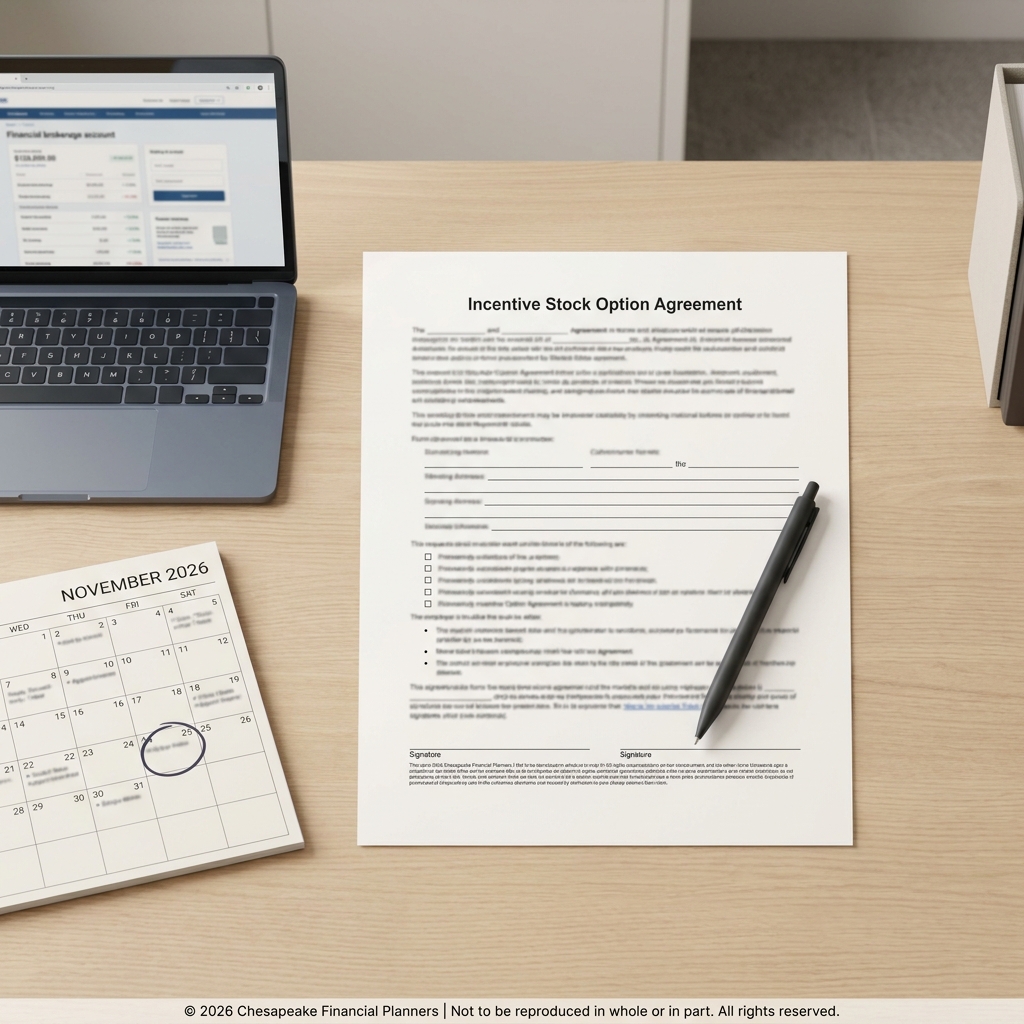
- Find out your PTEP (it's in your stock option agreement)
- Get the most recent 409A valuation from HR
- Run the exercise + AMT math before you give notice
- Talk to a financial advisor who specializes in equity comp
If you've already given notice:
- Mark your calendar with your last day + 90 days
- Request your exercise paperwork from your company immediately (don't wait)
- Run AMT projections with your tax advisor
- Decide quickly this is not the time to procrastinate
If you're negotiating a new offer:
- Ask about their PTEP for options
- Negotiate for an extended window (7-10 years) if possible
- Consider asking for a signing bonus to cover exercise costs if you're leaving valuable equity behind
The Brutal Truth
The 90-day window is one of the most predatory aspects of startup compensation. It disproportionately benefits founders and executives who can afford to exercise, and punishes everyone else.
If you're in this position, don't let guilt or FOMO drive a six-figure decision. Run the numbers. Assess the risk. Make the call that's right for your financial situation not the company's cap table.
And if you're early in your career, remember this when you're evaluating offers: options are only valuable if you can afford to exercise them when it matters.
Advisors associated with Chesapeake Financial Planners may be either (1) LPL Financial Registered Representatives offering securities through LPL Financial, Member FINRA and SIPC, and investment advisor representatives offering investment advice through Great Valley Advisor Group; or (2) solely investment advisor representatives offering investment advice through Great Valley Advisor Group and not affiliated with LPL Financial. Great Valley Advisor Group, and Chesapeake Financial Planners are separate entities from LPL Financial.
Chesapeake Financial Planners | 2402 Scotlon Ct, Forest Hill, MD 21050 | (410) 652-7868 | www.chesapeakefp.com
© 2026 Chesapeake Financial Planners | Not to be reproduced in whole or in part. All rights reserved.

