

Personal Financial Management Oversight
Because Having a Plan Isn’t the Same as Sticking to It

Featured In

















































You’ve built a successful life and with it, a complex financial landscape that demands more than a one-time plan. You want to feel in control, make the right decisions, and know that nothing important is slipping through the cracks. That’s where our personal financial oversight comes in.
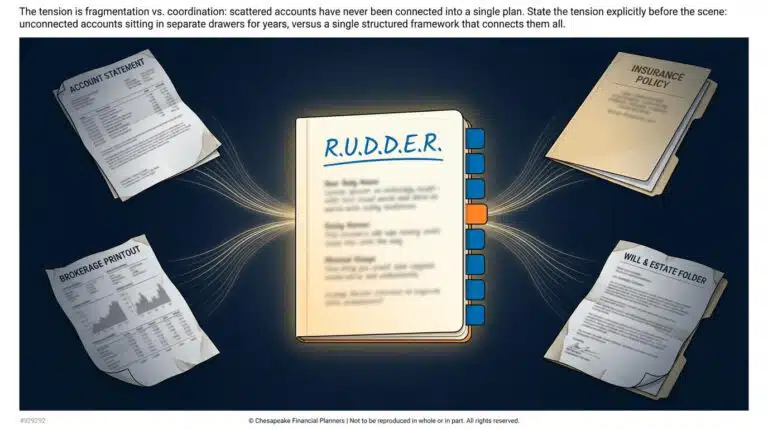
You stay in the driver’s seat; we help navigate. Using our R.U.D.D.E.R.™ method, we bring structure, clarity, and ongoing accountability to your entire financial life so you can move forward with confidence, not second-guessing. With us as your guide, you’re not just planning you’re following through.


Thomas Cowley
6 days ago
Mark and Jeff have handled my finances for over a decade. They have been great stewards for my investments which have grown substantially. They listen to my goals and give me recommendations and options to carry them out. I highly recommend them.

Jane Towery
3 months ago
I have been extremely pleased with Mark’s services over the last 15 years and would very highly recommend. Mark has taken the time to get to know my needs, interests, long and short term goals. We evaluate my portfolio yearly for any adjustments, reevaluation, or study trends. Mark objectively presents the pros and cons of options, answers questions, and leaves the final decision to me. I have never felt pressured and always appreciate how understood and listened to I have felt. More recently I have had some opportunity to work with Jeff as well. Mark and Jeff present a unified team who want to make your investments work for your needs.

Joyce Ducksworth
5 months ago
I have had the pleasure of entrusting my finances with Jeff and Mark for many years. Their expertise and advice are invaluable. My portfolio has grown significantly and has allowed me to retire comfortably with tremendous financial security. Mark is always available to answer my questions and provide solutions. I highly recommend Chesapeake Financial Planners.

stephen kinsley
5 months ago
Mark and Jeff have been my retirement advisors since 2011 and I could not be happier with them. They are knowledgeable and easy to talk with. They respond quickly to any questions and clearly explain all my options. I have been retired for 5 years and am fully confident that my financial future will continue to improve as it has so far with them. I would recommend them to anyone, and I only wish that I had met them sooner.

Bob Burris
6 months ago
I have been working with Mark and Jeff for 10+ years. I recently asked for a review of my financial plan and was provided outstanding feedback that provided me a much better solution.

Kim Wright
7 months ago
I am delighted with LPL. They've stayed with me for years and Jeff Judge has been exceptionally helpful. I've gotten good advice. He's managed my assets professionally and has always been available answer my questions.
He helped me consolidate several accounts into one manageable asset. He took the guesswork out of what could have been a complicated process.
I trust him to be there and guide me through issues in which I have no expertise. But he does this all the time and has proven to be trustworthy.
I do recommend Mr. Judge. You will not be disappointed.

Sharon Lewis
7 months ago
My husband and I met Mark and Jeff in 2014 when my husband left his job after 23 years. We met with Mark and Jeff to decide where to invest his retirement money. Before that decision was made, they took their time to understand our entire financial picture and based on that they gave us several options on where we could invest. They were very easy to talk with and made the conversation easy to understand. They are easy to get in touch with if you have questions and provide answers quickly. When it came time for me to retire, I also rolled my retirement investments into accounts managed by Mark and Jeff. We have also setup our estate planning as well as long term health planning based on advice we have had in review meetings in the years following our initial meeting. We have even referred our daughter and son in law to them. Highly satisfied with the investment service and customer service.

Andrew Benner
7 months ago
I check in with Mark a couple times a year and he always helps me keep my money that he manages growing. He also helps us with general advise regarding the type of places our 401k money should be (growth vs value, etc)

Mark Gray
9 months ago
Jeff has been helping me since 2014 with life insurance and retirement investment products. After a bad experience with a big insurance company, I found Mark and I’ve been working with him ever since. I’m successfully retired now and will begin drawing on my investments this year. I highly recommend Chesapeake Financial Planners for your retirement planning. – Mark G.

David Carrington
10 months ago
Jeff has been my financial advisor/ planner for several years. He has always guided me in the right direction and I have seen my retirement account continuously moving in the right direction. During the current uncertainty of the financial world right now Jeff has given me peace of mind that I continue to be in a safe and secure position with my finances. Jeff is very professional and quick to respond to my emails. As I approach my retirement years it is comforting to know my finances will be there when I need them.

Matt Hurson
11 months ago
I have been working with Jeff Judge and Chesapeake Financial Planners for about 3 years. Jeff has provided timely and well considered advice and acted promptly when I've needed access and changes to my portfolio. Highly recommend their services.

John Komoroski
12 months ago
We have worked with Jeff at Chesapeake Financial Planners for over 10 years. Throughout that time he has provided valuable investment and retirement information. Our investments have navigated this turbulent market far better than expected. Thank you Jeff.

Charles Gaither
12 months ago
I've been working with Chesapeake Financial Planners for a little over six years, and it's been an outstanding experience. They're knowledgeable, responsive, and consistently provide clear, personalized advice that aligns with my financial goals. Their long-term commitment and reliability have given me real peace of mind.
With our R.U.D.D.E.R. method™, you gain a clear path forward—one that adapts with your life, not just your portfolio. First, we Review where you stand and Recognize the patterns and risks shaping your finances. Then we Uncover your priorities and Understand what truly drives your decisions. Together, we Design and Develop a strategy that aligns with your goals, before Discussing and Deciding on next steps that feel right to you. From there, you Execute with confidence and Empower yourself with tools and insight, not guesswork. As life evolves, we continually Reassess and Refine your plan, so nothing gets stale or out of sync. The result? You stay in control with a trusted guide beside you and clarity replacing the chaos.
Investments
- Portfolio Reviews & Investment Advice
- Asset AllocationHow you divide your investments among different asset classes — stocks, bonds, real estate, cash — to balance risk and return based on your goals, timeline, and comfort with volatility. Getting your allocation right is one of the most important investment decisions you'll make, and it should shift over time as your life changes. & RebalancingThe process of periodically restoring your portfolio to its target asset allocation after market movements cause it to drift. Regular rebalancing enforces a buy-low, sell-high discipline and keeps your risk level aligned with your original plan over time. Strategies
- Risk Tolerance
- Dollar Cost AveragingInvesting a fixed dollar amount at regular intervals regardless of market price — buying more shares when prices are low and fewer when prices are high. It removes the pressure of trying to time the market and reduces the risk of investing a lump sum right before a downturn. Strategies
- Concentrated StockHaving a large portion of your net worth tied up in a single stock — often shares from a company you work for or founded. Concentration creates both significant upside potential and outsized risk, and managing it thoughtfully through diversification, charitable strategies, or staged sales is one of the most nuanced challenges in personal finance. Positions Strategies
- Withdrawal Strategies
- Stock Option Analysis
- Alternative Investment Strategies
Cash Flow
- Contributions & Savings Strategies
- Income & Expenses Analysis
- Emergency Funding
- Debt Management
- Large Purchase Funding
- Lending & Financing Analysis
- Advanced Strategies for Irregular Cash Flow
Retirement
- Retirement Outlook & Timing Analysis
- Retirement Plan Contributions
- Retirement Income Strategies
- Social Security Optimization
- Medicare Analysis
- Stress Testing
- RMDShort for Required Minimum Distribution — the annual withdrawal the IRS mandates from tax-deferred accounts starting at age 73. Planning for RMDs well in advance — through Roth conversions, Qualified Charitable Distributions, or strategic income management — can meaningfully reduce your lifetime tax burden. Planning & Execution
Insurance & Risk Protection
- Review Existing Policies
- Life & LTC Insurance Needs Analysis
- Health Care Planning
- Disability Needs Analysis
- Property & Casualty Analysis
- Creditor ProtectionLegal strategies designed to prevent creditors from reaching your assets in the event of a lawsuit or bankruptcy. Certain accounts — like IRAs and 401(k)s — have built-in protections by law, while others require deliberate planning through trusts, LLCs, or state-specific exemptions.
- Complex Insurance Trust Strategies
Income Tax
- Portfolio Gain/Loss Review
- Tax Optimal Withdrawal Strategies
- Roth ConversionMoving money from a traditional pre-tax IRA to a Roth IRA, paying income taxes now in exchange for tax-free growth and withdrawals in the future. Conversions make the most sense when your current tax rate is lower than what you expect in the future — making the years between retirement and RMD age a prime window for strategic action. Strategies
- 1040/1041 Analysis
- CPA Coordination
- Passive Income Analysis
- Business/Real Estate Purchase & Sale Analysis
Estate & Charity
- Beneficiary Audit
- Guidance for Basic Estate Docs
- Detailed Estate Flow Analysis
- Charitable Gifting Strategies
- Estate Attorney Coordination
- Estate TaxA federal (and sometimes state) tax on the transfer of assets to heirs at death, assessed on the total estate value above the applicable exemption. The federal exemption is currently elevated — $15 million per person — but it's scheduled to sunset at the end of 2026, potentially cutting the exemption roughly in half, which makes estate planning especially time-sensitive right now. Mitigation Strategies
- Private Foundations & Endowments
- Generational Transfer Planning
Family Wealth
- Net Worth Statement
- College Education Planning
- Gifting Strategies
- Lifestyle Change & Relocation Analysis
- Caring for Aging Parents
- What-If Scenarios
- Special Needs Planning
- Family Financial Counseling & Education
Business
- Self-Employed Income Planning
- Self-Employed Retirement Plan Selection
- Entity Structuring & Asset Titling Review
- Buy/Sell Agreement Analysis & Business Use of Insurance Strategies
- Business Cash Flow & Debt Restructuring Analysis
- Business Transition Options & Timing Analysis
Frequently Asked Questions
Am I saving enough for my future goals?
Whether you're saving enough depends on three things: your target goals, your timeline, and how efficiently your money is working across accounts and tax strategies. Most people save consistently but not strategically — putting money away without knowing if it's pointed at the right target or growing fast enough.
A sound answer requires modeling your specific situation: projected retirement income, spending needs, account structure, and tax exposure. Jeff Judge regularly works with clients who are saving good percentages of their income but still falling behind because of fee drag, tax inefficiency, or misaligned timelines.
At Chesapeake Financial Planners, we run the numbers with you, model different scenarios, and tell you plainly whether you're on track — or what it would take to get there.
How often should I meet with my financial planner?
Most clients benefit from meeting with their financial planner one to four times a year, depending on how complex their situation is and how much has changed. A single annual review works if your life is relatively stable. Four meetings a year makes sense when you're navigating a job transition, major purchase, tax planning window, or retirement countdown.
Between formal meetings, you should have ongoing access to your planner — not a voicemail queue. Life doesn't wait for the next quarterly slot.
At Chesapeake Financial Planners, clients meet as often as their situation calls for, with proactive outreach when tax law changes or a significant event warrants a conversation.
How should I adjust my plan for rising inflation?
Adjusting a financial plan for rising inflation means stress-testing your spending projections, revisiting your investment mix, and making sure your income sources keep pace with purchasing power erosion over time. Inflation hits hardest when withdrawals are fixed, cash reserves are oversized, or a portfolio skews too conservative.
Jeff Judge often tells clients to model their retirement spending at 3-4% annual inflation — not the Fed's 2% target — because the gap compounds significantly over a 25-year retirement.
Four areas to reassess:
1. Spending projections: Small annual increases compound quickly. Model at a higher rate than the headline figure suggests.
2. Investment mix: Equities and real assets have historically outpaced inflation over long periods.
3. Cash reserves: Excess cash loses real purchasing power in sustained inflation. Right-sizing this is a balance.
4. Income sources: Fixed pensions or bond income may need supplementing with growth-oriented assets.
At Chesapeake Financial Planners, we adapt plans as conditions change.
Should I update my financial plan after a big life event?
Yes, updating your financial plan after a major life event is almost always necessary. Marriage, divorce, a new child, a job change, a business sale, or the loss of a spouse each shifts the assumptions your plan was built on. Income, taxes, benefits, insurance needs, and estate documents can all change at once.
The sooner you update the plan, the more options you have. A delayed review after a divorce, for example, can cost years of tax optimization and beneficiary alignment.
Common triggers: marriage or divorce, a new child or dependent, a job change or retirement, selling a business, receiving an inheritance, a significant income shift, or a death in the family.
At Chesapeake Financial Planners, we treat life events as planning moments, not just administrative updates.
What’s the difference between financial planning and investment management?
Financial planning addresses your entire financial picture: goals, taxes, cash flow, insurance, estate, and retirement income. Investment management is one component of that picture, focused on your portfolio's allocation, performance, and risk alignment.
The distinction matters because investment returns alone don't determine whether you retire on time, minimize taxes, or protect your family. A well-managed portfolio inside a poorly structured plan still leaves significant money on the table.
At Chesapeake Financial Planners, we provide both. Your investments are built to support your plan, not the other way around.
How can a financial planner help me beyond picking stocks?
A financial planner helps you make better decisions across every area money touches, not just what's in your portfolio. That includes tax strategy, retirement income planning, insurance, estate documents, and coordinating with your CPA and attorney so nothing falls through the gaps.
Jeff Judge often describes this role to new clients as being a financial coordinator: someone who sees the whole picture when each specialist sees only their piece.
Beyond investing, planning adds the most value in five areas: reducing your current and future tax bill, building a retirement withdrawal strategy, right-sizing insurance coverage, navigating life transitions like a business exit or divorce, and keeping you accountable when markets get noisy.
At Chesapeake Financial Planners, we focus on decisions that move the needle, not just the portfolio.
What happens during a comprehensive financial planning review?
A comprehensive financial planning review examines your full financial picture and produces prioritized action steps across seven areas. It's a working session, not a report card.
A thorough review covers:
1. Goals: What matters most right now, and what has changed since the last review.
2. Cash flow and savings: Whether you're saving enough, in the right accounts, with the right structure.
3. Investments: Whether your portfolio aligns with your timeline, risk tolerance, and goals.
4. Tax strategy: Where you can reduce your current or future tax bill.
5. Insurance and risk: Whether your coverage is right-sized without overpaying.
6. Retirement income: Whether your timeline and withdrawal plan are still realistic.
7. Estate and legacy: Whether beneficiariesThe people or entities designated to receive your assets when you die — through retirement accounts, life insurance policies, or trusts. Keeping beneficiary designations current is one of the simplest but most overlooked parts of estate planning, and outdated designations can completely override what your will says., documents, and intentions are current.
Jeff Judge structures every review around what decisions are available to you right now, not a theoretical overview of your finances.
At Chesapeake Financial Planners, planning reviews are built around your changing life, not a fixed checklist.
Is financial planning worth it if I already have investments?
Yes, financial planning is worth it even if you already have a solid investment portfolio. Having investments isn't the same as having a plan. A portfolio without coordinated tax strategy, withdrawal sequencing, and insurance coverage often costs more in missed opportunities than it gains in returns.
Jeff Judge often tells new clients: the portfolio is usually fine. What's missing is the strategy built around it.
The questions a financial plan answers that a portfolio alone can't:
- Are your accounts structured to minimize taxes now and in retirement?
- Do you have a withdrawal sequence that reduces lifetime tax exposure?
- Is your insurance coverage right-sized?
- Are you saving in the right accounts for your goals and timeline?
- Do you have a contingency if something unexpected happens?
At Chesapeake Financial Planners, we connect the portfolio to the rest of your financial life.
What happens to unused money in a 529 college savings account?
Unused money in a 529A tax-advantaged savings account designed for education expenses, where contributions grow tax-free and withdrawals are tax-free when used for qualified education costs. Recent rule changes also allow unused 529 funds to be rolled into a Roth IRA, adding flexibility you may not have had before. college savings account doesn't have to go to waste. You have five options, and most families don't realize how flexible these accounts actually are.
1. Use it for other qualified education expenses: Graduate school, professional programs, trade schools, up to $20,000 per year in K-12 tuition, or up to $10,000 lifetime toward student loan repayment.
2. Change the beneficiary: Reassign the account to another eligible family member, including siblings, children, grandchildren, cousins, parents, or yourself.
3. Roll it into a Roth IRAA retirement account funded with after-tax dollars where your money grows completely tax-free and qualified withdrawals in retirement are also tax-free — including all the gains. There are no Required Minimum Distributions during your lifetime, making the Roth one of the most flexible and powerful long-term savings tools available.: You may be able to roll up to $35,000 of unused 529 funds into a Roth IRA for the original beneficiary, tax- and penalty-free, if the account has been open at least 15 years and annual rollovers stay within the IRA contribution limit.
4. Withdraw with taxes and penalties: Non-qualified withdrawals trigger income tax on earnings plus a 10% penalty on the earnings portion.
5. Keep it for future use: There's no deadline to use 529 funds.
At Chesapeake Financial Planners, we work through the best option for your family.
Will a financial plan actually change my financial future?
Yes, a well-executed financial plan measurably changes outcomes. It reduces tax exposure, closes savings gaps, prevents costly mistakes, and gives you a clear framework for decisions when markets or life get disruptive. The difference isn't the document; it's the ongoing strategy and accountability that comes with it.
Most people who fall short don't fail because they lack income or discipline. They fail because they're optimizing the wrong things: watching investment returns while ignoring a $30,000-a-year tax problem, or saving aggressively into the wrong account structure.
Jeff Judge has watched this pattern repeat across hundreds of client engagements. The plan isn't magic. What changes outcomes is having someone who spots the gaps, models the trade-offs, and holds you to decisions when it's tempting to delay.
At Chesapeake Financial Planners, that's what we're here to do.
*Advisors are only obligated to apply the fiduciary standard in advisory relationships. They are not legally obligated to apply the fiduciary standard when working in Brokerage only relationships
**Mark Rossbach is the only advisor who has attained the RICP and CPA Designations and Jeff Judge is the only advisor who has attained the CFP, ChFC and CLU Designations

Ready to stop second-guessing and start feeling in control?
Book a short “Fit Call” to see if we’re the right partner for your financial life. No pressure, no jargon, just a conversation focused on your goals and whether our approach makes sense for your needs.